She Came As Contract Bride To A Dying Man, His Cowboy Foreman Said “Stay After He’s Gone“
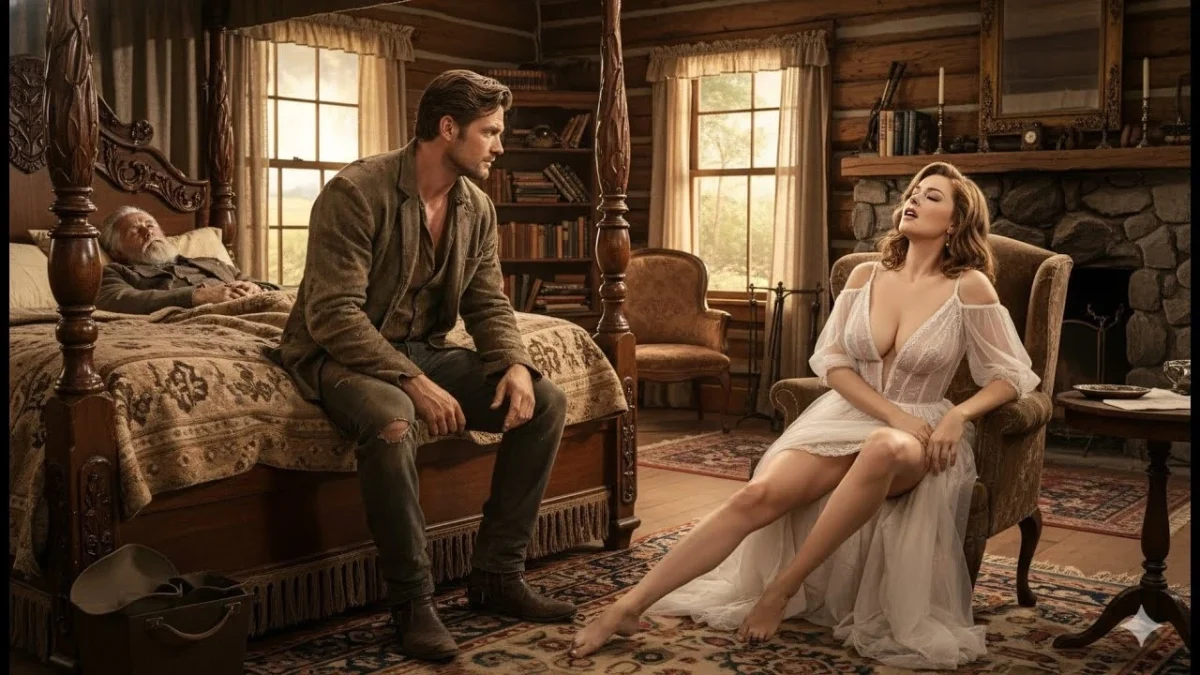
The stage coach lurched violently to the left, slamming Clara Whitlo’s shoulder against the wooden frame of the cabin for the hundth time that morning.
Dust, fine and acurid as ground pepper, hung suspended in the stagnant air inside the coach, coating the back of her throat and settling into the deep creases of her dark traveling dress.
When the driver finally hauled on the rains and shouted the horses down, the silence that followed was heavy.
Clara pushed open the door and stepped out into the mud of Bitter Creek.
It was not much of a town.
It was a scar on the face of the Wyoming territory, a collection of raw lumber storefronts and half-finished buildings that looked as if they might slide back into the earth during the next heavy rain.
The air smelled of wet pine, horse manure, and the metallic tang of impending snow.
Clara adjusted her bonnet, keeping her head low.
Men lined the boardwalks, leaning against posts or sitting on crates.
They stopped their conversations as she passed.
In a place like this, a woman traveling alone was not a curiosity.
She was a target.
She could feel their eyes on her back, assessing, calculating, stripping away the dignity she tried so hard to wrap around herself like a shield.
She clutched her small carpet bag tight against her ribs.
It was light, terrifyingly so.
Inside rested the sum total of her life, a Bible with a cracked spine, a letter she had read until the paper was soft as fabric and the ink was fading into gray ghosts, and three silver dollars wrapped in a handkerchief.
That money was not a safety net.
It was barely enough to buy a grave if things went wrong.
A wagon waited at the far end of the street.
The horses swishing their tails against the flies.
The man on the bench seat did not climb down to help her.
He simply watched her approach, his hat pulled low, a cigarette burning slowly between his lips.
You are the Whitlow woman? he asked.
His voice was like gravel grinding under a boot heel.
I am Clara Whitllo, she said, her voice steady despite the trembling in her legs.
Throw your bag in the back.
Boss is waiting.
The ride out to the Caldwell ranch took 3 hours.
They moved through a landscape that seemed determined to dwarf anything human.
The sage brush rolled out in endless gray green waves.
Broken only by the sudden violent rise of rock formations that looked like the exposed bones of the world.
The wind here did not just blow.
It hunted.
It whistled through the gaps in the wagon boards and stung Clara’s cheeks until they were numb.
When the ranch finally appeared, it looked less like a home and more like a fortress built against the sky.
The house was a sprawling two-story structure of dark timber, surrounded by outbuildings and corrals that stretched toward the foothills.
Cattle moved in the distance.
Dark islands drifting in a sea of pale windhipped grass.
It was beautiful in the way a storm is beautiful.
It was also brutal.
The wagon rattled to a halt near the main gate.
A man was waiting there.
He stood with one boot resting on the bottom rail of the fence.
His arms crossed over his chest.
He was tall, lean in the way that suggested muscle forged by hard labor rather than bulk.
This was Luke Tanner.
Clara knew the name from the letters.
Though the handwriting had been Everett, Luke did not smile.
He did not offer a hand.
He looked at her with eyes the color of flint, hard and unyielding.
Dust clung to his eyelashes in the brim of his hat.
He looked her over from her dusty boots to the top of her bonnet, his expression guarded, as if she were a shipment of feed that had arrived wet and spoiled.
You made good time, Luke said.
It was not a compliment.
It was just a fact.
The driver is efficient, Clara replied, stepping down from the wagon before he could decide whether or not to help her.
She would not start by asking for favors.
Luke nodded once, a sharp jerk of his chin.
Grab your things.
I will take you to him.
He turned and walked toward the house without waiting to see if she followed.
Clara grabbed her carpet bag and hurried to catch up, her skirts dragging in the dirt.
The house loomed over them.
The porch was wide.
The wood grayed by weather.
As they stepped inside, the air changed.
The outside world was vast and cold.
But the inside of the Caldwell house was stifling.
It smelled of woodm smoke, old leather, and something else, something sweet and rot-like.
It was the smell of sickness.
Wait here, Luke said.
He disappeared into a room off the main hallway.
Clara stood alone in the foyer.
The house felt silent.
But it was a heavy silence.
It felt like a place that was already mourning.
The walls soaking up grief before the death had even happened.
Luke returned a moment later and jerked his head toward the door.
He is awake.
Keep it short.
He is tired.
Clara walked into the room.
It was a library or a study.
Lined with books that looked like they had not been touched in years.
In the center of the room, positioned near the fireplace where a low fire burned, sat a man in a highback chair.
She had built a picture of Everett Caldwell in her mind during the long journey west.
She had imagined a stern, older cattle baron, perhaps weathered and harsh, looking for a woman to manage his household and warm his bed.
She had prepared herself for a marriage of duty to a hard man.
She was not prepared for this.
Everett Caldwell was not merely old.
He was being consumed.
He was thin.
His frame lost inside a wool coat that looked three sizes too large.
His skin was the color of parchment, translucent enough that she could see the blue veins mapping his temples.
His eyes fever glossed and overly bright.
Turned to her with a look of profound exhaustion.
[clears throat] When he saw her, he tried to straighten himself in the chair.
His hand, thin as a bird’s claw, reached for a glass of water on the small table beside him.
It shook so violently that water sloshed over the rim and stained the wood.
Miss Whitlo, he said.
His voice was a rasp, a dry leaf skittering over stone.
Clara stepped forward quickly, instinctively.
She took the glass before he could drop it and held it steady while he took a small sip.
Thank you, he whispered, pulling back, embarrassed.
A flush of color rose in his pale cheeks.
I apologize.
I’m not usually so uncoordinated.
You have nothing to apologize for, mister Caldwell, Clara said softly.
He looked at her, then really looked at her, and she saw a gentleness in him that broke her heart.
There was no demand in his eyes, only a terrible, crushing gratitude.
Thank you for coming, he said.
You are doing a kindness for a dying man.
Clara, I hope you know that.
Clara felt a cold shock settle in her stomach.
The letters had mentioned illness, a wasting condition, but they had not prepared her for the finality of it.
She was here to be a wife, but looking at him, she realized she had arrived just in time to be a widow.
We will make you comfortable, Clara said, the words coming automatically.
It was the voice she had used when she nursed her father, the voice of competence that hid the panic underneath.
Luke Tanner stepped into the room.
Then he did not look at Everett.
He looked at Clara and his gaze was a warning.
That is enough for now, Luke said.
He needs to rest.
I will show you to your room.
Everett nodded, his eyes already drifting shut.
Thank you, Luke.
Take care of her.
Luke ushered Clara out of the room and closed the heavy oak door.
The sound of the latch clicking into place echoed in the hallway.
He turned to her and for a moment they just stood there.
The hostility radiating off him was palpable.
You will sleep in the room at the end of the hall.
Luke said it is close enough to hear him if he calls out in the night.
I understand.
Clara said there are rules here.
Mrs.
Caldwell or soon to be anyway.
Luke crossed his arms.
The hands sleep in the bunk house across the yard.
You do not go there.
You do not walk near the corral after dark.
If you need something, you tell me or the cook, anxious to keep your reputation intact.
Clara stiffened.
I am not a child, Mr.
Tanner.
I know how to conduct myself.
Luke took a step closer.
He smelled of tobacco and horses and sweat.
This is not a city.
Clara, you are a strange woman on a ranch full of men who have not seen a lady in 6 months.
Gossip is the least of your worries.
Men get ideas.
Weakness draws them out.
If you are seen wandering where you do not belong, they will assume you are looking for something.
Do you understand me? His voice was low, but the threat was clear.
It wasn’t a threat from him, she realized, but a warning about the world he lived in.
This place could swallow a woman whole and never burp up the bones.
I understand, she said, matching his stare.
Good.
Supper is at 6.
Do not be late.
He left her there in the hallway.
Clara found her room.
It was small, spare, and clean.
A narrow bed, a wash basin, a wardrobe.
She set her carpet bag on the bed and opened it.
She took out the Bible and placed it on the nightstand.
She took out the letter and slid it under the mattress.
She sat on the edge of the bed and listened.
The house breathed around her.
Boards creaked as the temperature dropped with the setting sun.
Somewhere far off, a coyote yipped, a lonely, high-pitched sound that made the silence feel deeper.
And from down the hall, she heard it.
The sound of Everett coughing.
It was a wet tearing sound like a saw working through green wood.
It went on and on, racking his body until it faded into a wheeze.
Clara closed her eyes.
She had come here for safety.
She had come here because the contract offered a house, a name, and protection.
[clears throat] But as the wind howled against the window pane, she realized she had traded one kind of danger for another.
2 days later.
Ever insisted they go to town.
It has to be done proper.
He wheezed, sitting on the edge of his bed while Clara helped him button his shirt.
His fingers were useless that morning, numb and clumsy.
People talk.
Clara, if we are not married in the church with a paper signed and the preacher witnessing, they will say you are just kept.
I will not have that on your name.
Clara buttoned his collar, her hands brushing against his cold neck.
I do not care what they say.
Everett, you are not well enough to travel.
I am well enough to do this, he said.
And there was a flash of iron in his voice that showed the man he used to be.
The wagon ride to town was a torture.
Every rut in the road seemed to jar Everett’s bones.
Luke drove, his back stiff, his silence, a wall between them and him.
Clara sat in the back with Everett, supporting his weight against her shoulder, shielding him from the wind with her own body.
The church in Bitter Creek was a drafty wooden box with a leaning cross on the roof.
It was empty, save for the preacher, a tired-l looking man with spectacles and a woman sweeping the floor who stopped to watch them with open curiosity.
The ceremony was quick.
It felt less like a wedding and more like a legal deposition.
Everett stood by sheer force of will, gripping the back of a pew to stay upright.
Clara stood beside him, her dress brushed clean but still simple, feeling the weight of the moment settling on her shoulders like a yoke.
Do you, Clara Whitlo? Take this man.
I do, she said.
Her voice did not shake.
Do you, Everett Caldwell? I do, he whispered.
Luke stood by the door, a shadow against the bright afternoon light.
His hand rested near his hip, not on a gun, but ready.
He watched the windows.
He watched the street outside.
He was guarding them, but he was also witnessing the absurdity of it.
When the preacher pronounced them man and wife, there was no kiss.
Everett simply took her hand and squeezed it weakly.
Thank you, he said again.
As they walked out of the church, the town had woken up.
Women in bonnets paused on the boardwalk, whispering behind their hands.
Men stopped loading wagons to stare.
Clara kept her head high, but she heard them.
The wind carried their voices.
Mail order bride bought her, didn’t he? Just here for the deed.
Look at him.
He won’t last the month.
She felt the heat rise in her neck.
They looked at her not as a person, but as a transaction, a creature of opportunity.
She tightened her grip on Everett’s arm, helping him down the stairs.
Ignore them, Luke said.
He had brought the wagon around, positioning it to block the view of the loudest group.
Get in, Clara helped ever up, her jaw set.
She learned then that her name would never be spoken cleanly in this valley.
She was the contract bride, the vulture waiting for the carcass.
Back at the ranch, the pretense of normaly vanished.
Everett collapsed the moment they got him through the door.
The coughing fit that followed was terrifying, bringing up blood that stained his handkerchief a bright frothy red.
Clara took charge.
She did not ask Luke for permission.
She simply ordered hot water and clean linens.
She stripped the heavy coat off Everett and got him into his night shirt.
She bathed his face with cool cloths, her movement sufficient and sure.
Luke stood in the doorway of the bedroom, watching her.
He had expected her to be squeamish.
He had expected her to weep or ring her hands.
Instead, he saw a woman who moved with the economy of a soldier.
She did not flinch at the blood.
She did not recoil from the smell of sickness.
She spoke to Everett in a low, steady stream of nonsense.
quiet reassurances that seem to anchor the dying man when the panic of suffocation set in.
Breathe easy, Everett.
That is it.
Just the air.
I am right here.
The water is cool.
When Everett finally settled into a fitful sleep, Clara straightened up and wiped her hands on her apron.
She turned to find Luke still watching her.
His face was unreadable, but the tightness around his eyes had loosened by a fraction.
A single notch.
You have done this before, he said.
It was not a question.
Yes, Clara said.
Family, my father and others.
Sickness is not new to me.
Mister Tanner.
Luke looked at Ever’s sleeping form.
Then back to her.
He looks rested more than he has in weeks.
He is afraid, Clara said bluntly.
Pain he can handle.
Fear is harder.
Luke nodded slowly.
He didn’t say thank you.
He didn’t smile, but he stepped back from the doorway to let her pass.
I will tell the cook to keep the broth hot.
It was the first time he had offered her anything resembling cooperation.
[clears throat] The weeks that followed fell into a rhythm.
The ranch work went on.
Calves were branded, fences mended, horses broken.
But inside the house, time was measured in breaths and doses of ldinum.
Clara refused to be a guest in her own home.
When Everett was sleeping, she went to the kitchen.
The cook, a balding man named Silas, who had lost three fingers on his left hand to a rope accident, was initially hostile.
But Clara did not try to change his recipes.
She simply picked up a knife and started peeling potatoes.
She scrubbed the floors.
She mended the torn shirts the hands left in a pile by the back door.
She insisted on helping.
Dependence felt like a trap to her.
If she sat in the parlor and did needle point while men worked, she was nothing but a burden.
If she worked, she earned her space.
One morning, just before dawn, Clara stepped out onto the porch.
The house had been stifling, the smell of illness too much to bear.
She needed air.
The sun was just crowning the eastern peaks, painting the sky in bruises of purple and gold.
The air was frigid.
Clara hugged her arms around herself, shivering violently in her thin shawl.
She had not realized how cold it had gotten overnight.
She heard a boot scrape on the wood behind her.
She turned to see Luke standing there.
He had a mug of coffee in his hand, steam rising from it.
He looked at her, seeing the way her teeth chattered.
Without a word, he set the coffee down on the railing.
He took off his heavy sheepkin coat.
He stepped forward and draped it over her shoulders.
The coat was heavy, warm, and smelled of him.
Earth and tobacco.
Clara froze, surprised by the weight of it.
She looked up at him.
Luke seemed to regret the action almost immediately.
He stepped back, his face closing off again.
Don’t catch your death out here, he muttered.
We have enough sickness in the house.
Thank you, Clara said, pulling the collar tight.
He grunted and picked up his coffee.
Turning his gaze out toward the pasture, he stayed there for a moment, standing next to her in the silence.
It was an uneasy closeness, born of proximity rather than affection, but for the first time, Clara did not feel entirely alone.
Later that afternoon, Everett [clears throat] was lucid.
The fever had broken for a few hours, leaving him weak but cleareyed.
He asked Clara to sit by the bed.
Clara, he said, his voice barely a whisper.
I need you to know the truth.
I know the truth.
Everett, you are sick.
No, he said.
Not that.
The reason for the contract.
Clara folded her hands in her lap.
You were lonely.
He smiled, a sad, skeletal expression.
Lonely? Yes, but a man does not marry a stranger just for loneliness.
He paused, gathering breath.
It is the land, Clara.
This ranch, I built it from nothing.
I bled for it, but I have no sons.
I have no brothers who are worth a damn.
He reached out and took her hand.
His grip was surprisingly strong.
When I die, the vultures will come.
My cousin Harlon, the banker in town, Silus Crow, the man who runs the spread to the north.
They are waiting for me to stop breathing so they can carve this place up.
Clara felt a chill that had nothing to do with the winter air.
If I die a bachelor, the state steps in.
The family steps in.
They [clears throat] will tear it apart.
But a widow? He looked at her intensely.
A widow holds the deed.
A widow has rights.
I needed a legal wife to stand between my land and the men who want to steal it.
Clara pulled her hand back slowly.
The realization hit her like a physical blow.
She had thought she was hired to be a nurse, a companion, a comfort to a dying man.
But she was not.
She was a shield.
She was a legal instrument, a human barricade erected to hold back a flood.
You hired me to be a weapon, she said quietly.
I hired you to survive.
Ever said, I am sorry, Clara.
I know it is a heavy thing to place on you, but I saw your letters.
I saw the way you wrote about survival.
I knew you were strong enough.
Clara stood up and walked to the window.
She looked out at the vast empty prairie.
She felt used.
She felt the sting of it, sharp and hot.
But beneath the anger, she felt a strange dark recognition.
She knew what it was to be desperate.
She knew what a person would do when their back was against the wall.
I will protect it, she said, not turning around.
Thank you, Everett whispered.
The trouble started 3 days later.
It was late afternoon when a rider came galloping through the main gate.
His horse lthered and blowing hard.
Clara was on the porch shaking out a rug.
She watched as Luke met the rider in the yard.
They spoke in low, urgent tones.
She saw Luke’s posture shift, his shoulders squared, his jaw tightened until the muscle jumped in his cheek.
He looked toward the north, his eyes narrowing.
He walked up to the porch, his boots heavy on the steps.
What is it? Clara asked.
Luke stopped.
He looked at her, debating how much to say.
Finally, he decided she needed to know.
One of the boys found a cut in the north fence line.
50 head of cattle were pushed out.
Silus Crow’s men are claiming that section of range belongs to them now, but it’s Caldwell land, Clara said.
Luke gave a grim laugh.
Maps don’t mean much when the owner is dying in bed.
Clara, they are testing us.
They want to see if we have the teeth to fight back.
That night, the wind picked up, howling around the eaves of the house.
Clara could not sleep.
She sat in the parlor, a lamp burning low on the table.
Suddenly, the dogs in the yard began to bark.
A frantic, snarling sound.
Luke was moving before Clara even registered the noise.
He came down the stairs, a Winchester rifle in his hand.
He didn’t look at her.
He went straight to the front door and threw it open.
Stay inside, he ordered.
He stepped out onto the porch.
Clara did not stay inside.
She picked up the lamp and followed him to the doorway.
She saw them in the moonlight.
Riders, four or five of them, sitting on their horses just beyond the gate.
They were shadows, faceless and silent.
They weren’t attacking.
They were watching.
It was a message.
We are here.
We are waiting.
Luke raised the rifle, the barrel gleaming in the moonlight.
Get off this land, he shouted, his voice cracked like a whip across the yard.
Or I will bury you in it.
One of the riders chuckled, a low, ugly sound.
Then they turned their horses and rode off into the dark, vanishing as quickly as they had come.
Luke stood there for a long time, the rifle still raised.
Clara stepped out onto the porch behind him.
The wind tried to snuff out her lamp, but she cupped her hand around the glass, protecting the flame.
She stood close enough to hear Luke’s breathing.
It was ragged, angry.
She saw the tension in his back.
The way his knuckles were white on the guntock.
They will be back, Clara said softly.
Luke lowered the rifle.
He turned to look at her.
The lamplight cast deep shadows across his face, making him look older, harder.
Yes, he said.
They will.
He looked at the small flame in her hand, trembling in the wind, but refusing to go out.
Then he looked at her eyes.
There was no fear there, only a cold calculation that matched his own.
Get inside, Clara, he said, his voice softer than before.
It’s going to be a long night.
Clara nodded.
She turned back to the house, the lamp guiding the way, while Luke stayed on the porch, a sentinel against the dark, watching the empty horizon where the coyotes had begun to sing.
The first snow of the season did not fall.
It was driven sideways by a wind that screamed down from the big horn mountains, stripping the last of the brown leaves from the cottonwoods along the creek.
Inside the Caldwell house, the air grew heavy, not just with the impending winter, but with the suffocating weight of time running out.
Everett’s decline was not a slide.
It was a cliff.
The coughing fits that had once been nightly interruptions now governed the hours of the day, leaving him gray-faced and trembling against the pillows.
Dr.
Thorne rode out on a Tuesday, his horse picking its way carefully through the frozen mud of the yard.
He spent an hour in the room with Everett.
When he emerged, wiping his hands on a rag.
His face was drawn.
He offered Clara a platitude about rest and warm broth, but his eyes did not hold hers.
Luke walked the doctor to his horse.
Clara watched from the parlor window, the glass cold against her forehead.
She saw the doctor speak, saw Luke’s shoulders stiffen as if he had taken a blow to the gut.
The doctor mounted and rode away, leaving Luke standing in the biting wind, staring at the ground.
When Luke came back inside, he did not look at Clara.
He went straight to the liquor cabinet, poured a glass of whiskey, and drank it in one swallow.
He will not see the spring, Luke said.
The words hung in the room, flat and final.
Clara did not weep.
She had known this since the moment she arrived, though knowing did not lessen the sting of it.
I will keep him comfortable, she said.
You will keep yourself standing, Luke countered, turning to look at her.
His eyes were red rimmed.
You have been up three nights running.
If you drop, who tends him then? Me.
I have cattle to move before the drifts get too deep.
I am fine, Clara said, hiding her hands in the folds of her apron so he would not see the tremor in her fingers.
You are lying, Luke said.
But there was no heat in it, just fatigue.
Necessity forced the door of trust open, even if only a crack.
With Everett bedridden and drifting in and out of fever dreams, Luke could not manage the sprawling operation of the ranch alone.
He needed a proxy for the household, for the ledgers, for the endless stream of decisions that a ranch demanded.
Come here, Luke said one evening, gesturing to the heavy oak desk in Everett’s study.
Clara sat.
The leather chair swallowed her.
Luke stood behind her, leaning over her shoulder to point at the open ledger.
He smelled of cold air and saddle leather, an intense masculine scent that made Clara’s breath hitch in her throat.
This is the feed account, Luke said, tapping the page with a rough, calloused finger.
This is the payroll.
Ever usually signs here, but he is too weak to hold the pen steady.
You need to learn his hand, or at least you need to know what it looks like so you know when it is being forged.
Clara studied the columns of numbers.
She had a mind for figures.
Her father had been a merchant before the drink took him, and she had balanced his books until there was nothing left to balance.
She traced the lines of ink.
Something snagged her eye.
Luke, she said.
What? Look at this entry from October.
50 sacks of grain paid for at the merkantile in town.
Luke squinted at the line.
Yeah, so look at the delivery manifest from the same week.
She flipped the page back.
Only 30 sacks were signed for at the barn.
Luke frowned.
He leaned closer, his arm brushing against her shoulder.
Clara went still, hyper aware of the heat radiating from him.
Maybe a mistake, Luke rumbled.
Maybe, Clara said, flipping forward.
But here in November, a purchase order for new tac, two saddles, four bridles, high quality.
I remember that, Luke said.
We needed them.
Did you get them? Clara asked.
Because the inventory list from last week shows the tack room is short.
Luke straightened up slowly, his face darkened.
The exhaustion vanished, replaced by a predator’s alertness.
Someone is bleeding us, he said quietly.
While Everett is dying, Clara added.
While everyone is looking at the sick bed, someone is robbing the pantry.
Luke took the ledger from her, his grip tight enough to whiten his knuckles.
I will kill whoever it is.
Not yet, Claraara said, her voice sharp.
If you start accosting men without proof, you will lose the crew.
We need to watch.
We need to be sure.
Luke looked at her really looked at her with a mixture of surprise and begrudging respect.
He had expected her to panic.
Instead, she was plotting.
You’re right, he said.
We watch.
The thief was not the only vulture circling.
Two days later, a buggy with mud spattered wheels rolled into the yard.
A man stepped out dressed in a suit that cost more than a year’s wages for a cowboy.
He wore polished boots that looked obscene against the ranch dirt.
It was Mr.
Vance, the banker from Bitter Creek.
He did not wait to be invited.
He walked onto the porch where Clara was sweeping, tipping his hat with a smile that did not reach his eyes.
Mrs.
Caldwell, I presume, Vance said.
A pleasure.
I am here to see your husband.
Urgent business regarding the mortgage adjustments.
He is not receiving visitors, Clara said, blocking the door.
Vance’s smile tightened.
It is a matter of finance.
My dear, not something for the lady of the house to worry her pretty head about.
If Everett can hold a pen, he can see me.
He stepped forward expecting her to move.
Clara did not move.
I said he is not receiving visitors.
Mister Vance.
Vance reached out, his hand closing on her upper arm to move her aside.
It was a patronizing, dismissive touch, but before Clara could pull away.
A shadow fell over them.
Luke Tanner came around the corner of the house.
He moved with a deceptive slowness.
Like a coiled snake, he did not speak.
He simply stepped between Clara and the banker, his chest colliding with Vance and forcing the smaller man to stumble back down the porch steps.
Mister Tanner, Vance sputtered, straightening his coat.
This is highly irregular.
I have papers.
Get in your buggy, Luke said.
His voice was low, devoid of bluster.
I am here on legitimate business.
The bank requires the bank can wait until the man is dead, Luke said.
If you put a hand on her again or if you try to force your way into this house while he is breathing, I will tie you to your horse and drag you back to town.
Vance turned a modeled shade of red.
You are a foreman.
Tanner, a hired hand.
You do not have the authority.
I have the only authority that matters out here, Luke said.
He rested his hand on the knife at his belt.
Vance looked at Luke’s face, then at the knife.
He swallowed his words.
He glared at Clara, a look of pure polished venom.
You are making a mistake, he hissed.
When the old man goes, this note comes due.
Remember that.
He climbed into his buggy and lashed the horses, tearing out of the yard.
Luke watched him go, his body still rigid with tension.
He turned to Clara.
Are you hurt? He asked.
Clara rubbed her arm where Vance had touched her.
No, thank you, Luke.
He nodded, but he did not step away immediately.
For a moment, they stood close in the cold air, the adrenaline of the confrontation humming between them.
Then, without a word, Luke turned and walked toward the barn.
Everett spent his waking hours looking at the ceiling or at the window where the sky was turning the color of slate.
He asked Clara to read to him.
He did not want the Bible.
He wanted travel books, stories of cities he had never seen, oceans he had never crossed.
One afternoon, reading a passage about the streets of Paris.
Everett stopped her.
I never went, he said softly.
Went where? Clara asked, lowering the book.
Anywhere? I came west when I was 20.
I thought I thought if I built something big enough, something permanent, I would finally feel like I belonged to the earth, like I mattered.
You built this ranch, Everett.
It matters.
He turned his head on the pillow, his eyes wet.
I worked myself into the grave.
Clara, I traded my life for fences and cows.
And now I am dying in a room full of things, and the only person who cares enough to wipe my brow is a woman I had to pay to be here.
Clara felt a lump rise in her throat.
That is not true, Everett.
Luke cares.
Luke is loyal, Everett corrected.
Loyalty is different from love.
And you are kind.
But I bought your kindness.
Clara reached out and took his hand.
You did not buy my kindness.
Everett, you bought my presence.
The kindness is free.
He squeezed her fingers weak and trembling.
You are a good woman.
Clara Whitllo.
I’m sorry I did not find you 10 years ago.
We might have had a life.
The nights were the hardest.
The wind rattled the window panes like a thief trying to get in.
Clara slept fitfully.
Every creek of the floorboards made her heart hammer against her ribs.
She had a ritual before she slept.
She took a heavy wooden chair and wedged it under the doororknob of her bedroom.
It was a habit from the boarding house in St.
Louis from the nights after her father died when the landlord had decided a grieving daughter was fair game.
She kept her money, the few coins she had left, sewn into the hem of her petticoat.
She never walked into a room without checking the exits.
One night, Luke knocked on her door to tell her the fire in Everett’s room needed banking.
When she opened it, he saw her pulling the chair away from the knob.
He stopped, his eyes narrowing.
You lock your door, Clara flushed, feeling foolish.
It is a habit.
You are safe here, Luke said, his voice rough.
None of the hands can get into the main house.
I see to that it is not the hands I Clara trailed off.
She could not explain it to him.
She could not explain that safety was a luxury she had unlearned years ago.
Luke looked at the chair then at her.
He saw the way she stood, wait on her back foot, ready to retreat.
He saw the way her eyes darted to his hands.
Who hurt you? he asked.
The question was sudden, blunt.
Clara stiffened.
That is not your concern.
It is if you are barricading yourself in my employer’s house like you expect a siege.
I expect nothing.
Clara said, I just I learned not to rely on kindness or the honor of men.
Luke looked at her for a long moment.
His face softened, just a fraction.
It was a look of understanding, a recognition of a fellow soldier in a war that had no name.
Keep the chair, he said quietly.
If it helps you sleep, but you don’t need it for me.
He turned and walked away down the hall.
Clara watched him go, then slowly replaced the chair under the knob.
But that night, she slept a little deeper.
The storm hit 3 days later.
It was a true Wyoming blizzard, a wall of white that erased the world.
The temperature plummeted until the nails in the walls popped with the sound of gunshots.
The ranch went into survival mode.
There was no hierarchy now.
Only the work.
The cattle had to be fed.
The wood had to be hauled.
The fires had to be kept burning.
The cook, Silus, came down with a fever.
Leaving the kitchen to Clara.
She spent her days alternating between nursing Everett and cooking huge pots of stew for the freezing men who stumbled in from the storm.
Luke was everywhere.
He was a force of nature, moving through the drifts to carry feed to the stranded calves, chopping wood until his shirt was soaked with sweat despite the cold.
One evening, the storm was howling so loud they had to shout to be heard.
Luke came into the kitchen, stomping snow from his boots.
He looked exhausted, his face was gray with cold, his hands raw and red.
Clara was at the stove.
She poured a mug of coffee and shoved it into his hands.
Drink, she ordered.
Luke took it, wrapping his frozen fingers around the ceramic.
He leaned against the counter, closing his eyes as the steam hit his face.
We lost two calves in the south pasture, he said.
Drifts are 5 ft deep.
You did what you could, Clara said.
She reached out and touched his sleeve.
It was wet.
You are soaked through.
Luke, you will catch pneumonia.
He opened his eyes and looked at her.
Her hand was still on his arm in the small lamplit kitchen with a storm raging outside.
The distance between them felt very small.
He did not pull away.
He looked at her with a raw, unguarded intensity.
Clara saw past the hard foreman, past the wall he kept up.
She saw a man who was carrying the weight of the world on his back because he didn’t know how to put it down.
Sit, she said softly.
I will get you some stew.
Luke sat at the small table.
He watched her move around the kitchen.
There was a domesticity to it that made his chest ache.
It felt wrong and it felt inevitable.
You are good at this, he said.
The ranch life, it suits you.
It is just work, Clara said, setting a bowl in front of him.
Work is the same everywhere.
No, Luke said.
Some people break out here.
The wind drives them mad.
The silence eats them.
You You just dig in.
Clara sat opposite him.
I have nowhere else to go.
Luke, that makes it easy to stay.
Luke looked at her, his spoon hovering over the bowl.
You could have gone anywhere.
Why here? Why a dying man? Because a dying man needed me, Clara said simply.
And I needed to be needed.
The silence that followed was not empty.
It was filled with the things they could not say.
The snow stopped, leaving the world buried in white.
The work redoubled, a new hand.
A man named Grady, who had been hired just before the snow, was sitting in the bunk house while Luke was giving orders.
Clara had come out to the porch to shake out a blanket.
Grady watched her, then nudged the man next to him.
Boss bought himself a warm spot for the winter, didn’t he? Shame he can’t use it.
Reckon she’s getting lonely in that big bed? He spoke too loud.
Luke was standing 10 ft away.
He did not shout.
He crossed the distance in two strides.
He grabbed Grady by the front of his coat and slammed him back against the rough timber post of the porch.
The sound of the impact echoed across the yard.
Grady gasped, the air driven from his lungs.
Luke’s forearm was pressed against his throat.
You pack your roll, Luke snarled, his face inches from Grady’s.
You get your horse and you’ll ride now.
But the snow, Grady choked out.
I don’t care if you freeze, Luke said.
If I hear you speak her name again, I will cut your tongue out.
He shoved Grady away.
The man stumbled and fell into the snow.
Luke turned to the rest of the crew who were watching in stunned silence.
That goes for all of you, Luke shouted.
She is Mrs.
Caldwell.
You treat her with the respect you would give your own mother or you answer to me.
Is that clear? The men nodded, looking at their boots.
Clara stood on the porch, the blanket clutched to her chest.
She was shaking, not from fear of the violence.
She had seen men fight before.
She was shaking because of the reason.
He had done it for her.
Luke turned and looked at her.
His chest was heaving.
There was a wildness in his eyes that terrified her and thrilled her in equal measure.
He didn’t say a word.
He just turned and walked toward the barn.
Clara went back inside, her heart pounding.
She hated how much his defense warmed her.
Warmth was dangerous.
Warmth turned into need, and need was a weakness she could not afford.
Everett rallied one last time.
It was the false dawn before the end.
A burst of energy that fooled no one.
He called Luke into the bedroom.
Clara was there measuring medicine at the side table.
Luke, Everett said, his voice surprisingly strong.
Sit down, Luke sat, holding his hat in his hands.
I am not going to last the week, Everett said.
Don’t talk like that, Luke said.
Don’t lie to me, son.
We both know it.
Everett took a breath that rattled deep in his chest.
I need to know something.
When I am gone, I need to know you will look after her.
Clara froze.
She kept her back turned, her hand hovering over the bottle.
Luke shifted in the chair.
She will have the ranch, Everett.
She will have the law on her side.
The law is paper.
Everett said.
Paper doesn’t stop a bullet.
Paper doesn’t stop Silus Crow.
I need a man I trust to stand between her and the wolves.
Promise me, Luke.
Promise me you won’t leave her to face this alone.
Luke looked at the floor, his jaw working.
Pride and loyalty were waring inside him.
To stay meant to serve a woman he was dangerously close to wanting for himself.
To leave meant abandoning the only home he had known for 10 years.
I can’t be her keeper.
Everett, Luke said horarssely.
I am not asking you to be her keeper.
I am asking you to be her ally.
Please.
Luke looked up meeting Everett’s desperate gaze.
He saw the fear in the old man’s eyes.
Not for himself but for her.
I promise.
Luke said, I will stay until she is safe.
Clara felt a flush of heat travel up her neck.
She felt protected.
Yes, but she also felt insulted.
They were discussing her survival as if she were a prize mare that needed guarding.
Everett fell asleep soon after.
Luke stood to leave, but Clara followed him into the hallway.
Wait, she said.
Luke stopped.
What is it? I heard you.
Clara said, I heard you promise to watch over me.
Luke sighed, running a hand through his hair.
He was worried about you.
Clara, I am not a child.
Luke, and I am not a piece of property to be passed from one man’s authority to another.
I do not need a guardian.
Luke stepped closer, backing her against the wall.
He did not touch her, but his presence was overwhelming.
You think you know this world, Clara? You think because you survived a city, you can survive this? These men, Crow, the banker, your neighbors, they don’t care about your dignity.
They don’t care about your independence.
They see a woman alone on 5,000 acres of prime grazing land.
And they see a victim.
I can fight, Clara said, lifting her chin.
You can’t fight a range war with a sewing needle, Luke said bluntly.
Authority is the only language this country respects.
If I am standing next to you, they hesitate.
If you are alone, they strike.
I won’t be owned.
Luke, not by Everett and not by you, Luke’s expression cracked.
The anger drained away, leaving something raw and painful.
I don’t want to own you, Clara, he whispered.
I just want you alive.
The confession hung in the air between them.
Luke looked like he wanted to take the words back, but it was too late.
He turned on his heel and walked away, leaving Clara standing alone in the dark hallway, her heart racing.
Two days later, Everett asked Clara for a promise of her own.
He was very weak now.
His skin was gray, his breath coming in shallow gasps.
Clara, he whispered.
I am here.
You have been so good to me.
Better than I deserved.
She wiped his forehead with a cool cloth.
Rest, Everett.
No.
Listen.
When I am gone, the ranch is yours.
But do not let it become a prison.
If you want to sell it, sell it.
If you want to go back east, go.
I am not going back.
Clara said.
Good.
But promise me something.
Promise me you will choose.
Do not let the contract define your life.
Marriage.
It should be a choice, not a bargain.
I promise.
Clara said, tears stinging her eyes.
Promise me you will find happiness, even if it is not what people expect.
Clara knew he was talking about Luke.
She squeezed his hand.
I promise.
The town began to turn.
It started with small things.
When Clara went into Bitter Creek for supplies, the shopkeeper was slow to serve her.
Women crossed the street to avoid walking near her.
Then came the notes.
She found the first one tucked into the seat of the buckboard wagon.
a scrap of dirty paper with crude block letters.
Gold digger, go home.
The second one was nailed to the gate of the ranch.
She did not show them to Luke.
She burned them in the kitchen stove.
She realized someone was shaping a story about her.
They were painting her as the schemer, the young woman praying on the dying elder.
By the time Everett died, the town would be ready to hang her, at least in spirit.
Luke knew, though he didn’t mention the notes, but he started trailing her.
When she said she needed to go to town, he suddenly had errands at the blacksmith.
They rode in the wagon together, sitting side by side on the bench seat.
The silence was thick.
Every time the wagon hit a rut and their shoulders brushed, a jolt of electricity went through Clara.
She would pull away, angry at herself.
He is dying, she told herself.
My husband is dying.
This is a sin.
But when she looked at Luke out of the corner of her eye, his profile sharp against the sky, his hands confident on the res, she could not stop the feeling.
Luke’s voice dropped when he spoke to her now.
It was no longer the bark of a foreman.
It was lower, intimate.
Are you warm enough? he would ask.
I am fine, she would say, her breath catching.
He would look at her, a lingering glance that lasted a second too long, and she knew he was fighting the same battle.
The end came on a Tuesday.
Everett had insisted on seeing the preacher one last time, not for rights, but for business.
He wanted a new will signed.
He did not tell Clara what was in it, only that it had to be done.
The preacher came, nervous and sweating.
He witnessed the signature.
Everett’s hand shook so badly the pen tore the paper, but he signed it.
Everett James Caldwell.
Done, Everett whispered, sinking back into the pillows.
It is done.
An hour later, Clara was in the kitchen when she heard the crash.
She ran to the bedroom.
Everett had tried to get out of bed.
He was on the floor, tangled in the sheets, gasping for air like a fish on a bank.
Everett.
Clara screamed.
Luke was there in seconds.
He didn’t hesitate.
He scooped Everett up in his arms as if the man weighed nothing at all.
He lifted him like a child and laid him back on the bed.
Everett’s eyes were wide, terrified.
He was drowning in his own lungs.
Clara grabbed the basin of cool water.
She rung out a cloth and pressed it to his throat.
Luke, hold him up, she commanded.
He can’t breathe lying flat.
Luke sat on the edge of the bed and pulled Everett’s torso up against his chest.
He held the dying man with a tenderness that shattered Clara’s heart.
Breathe, Everett, Luke murmured.
Just breathe.
Clara knelt by the bed, holding Everett’s hand, wiping the sweat from his face.
They moved together, she and Luke.
A single unit of desperate care.
There was no panic.
There was no time for panic.
There were two people standing on the edge of a cliff holding a man who was already falling and in the quiet terror of that room with the wind howling outside.
They were the only family Everett Caldwell had left.
The end of Everett Caldwell did not come with a speech.
It did not come with a moment of clarity where the clouds parted and the sun touched his face.
It came in the dark, in the brutal, suffocating hours between midnight and dawn, where the only sound in the world was the terrible labor of his lungs.
The room smelled of sickness, a sweet, cloying scent of sweat and medicine that seemed to have soaked into the very grain of the floorboards.
The fire in the great had burned down to embers, casting a dull red glow that barely reached the corners of the room.
Clara sat by the bed.
She had not moved in 4 hours.
Her back achd with a sharp stabbing pain, but she did not shift her weight.
She held Everett’s hand.
It was limp and cold, the skin papery dry.
He was drowning.
That was the only way to describe it.
The fluid rising in his chest was a tide that would not go out.
His eyes were wide, fixed on the ceiling, blind with panic.
Every breath was a battle, a gasping, rattling intake of air that seemed to cost him everything he had left.
Clara leaned close, her lips brushing his ear.
I am here, she whispered.
Her voice was the only steady thing in the room.
You are not alone.
Everett, just breathe.
Easy now.
I have you, she lied to him.
She did not have him.
Death had him, and it was dragging him away by inches.
But she kept whispering, reciting the 23rd Psalm, reciting nonsense, reciting anything to fill the silence that threatened to swallow him before he was gone.
Luke Tanner stood outside the door.
He had been there all night.
He did not come in.
He stood in the hallway like a man guarding the edge of a grave, his shoulder propped against the wall, his arms crossed.
He listened to the rattling breath.
He listened to Clara’s soft, murmuring voice.
He felt a helplessness so profound it made his hands shake.
He was a man who fixed things.
He mended fences.
He healed cattle.
He broke horses.
But he could not fix this.
Inside the rhythm changed.
The gasping stopped.
There was a long suspended silence.
Clara squeezed Everett’s hand.
Everett.
He let out one last long exhale.
A sound like a sigh of relief.
And then he simply stopped.
The tension went out of his frame.
His eyes still open lost their gloss.
He was there and then in the space of a heartbeat, he was not.
Clara sat there for a long time.
She did not cry.
She felt a strange hollow ringing in her ears.
She reached out and gently closed his eyes with her fingertips, a gesture she had performed for her father and for a neighbor’s child during the fever winter in St.
Louis.
It was a muscle memory of grief.
She stood up, her knees cracked.
She walked to the door and opened it.
Luke was standing there in the gloom.
He looked at her and he knew.
He saw the stillness in her face.
The way she held herself like she was made of glass.
He is gone, Clara said.
Luke nodded.
He didn’t speak.
He pushed past her into the room.
He walked to the bed and looked down at the man who had been his employer, his mentor, and his friend for 10 years.
Luke reached out and touched Everett’s shoulder.
A clumsy, heavy pat.
Rest easy.
Boss, Luke rasped.
Then he turned and walked out of the room, past Clara, down the hall, and out the front door.
Clara followed him as far as the porch.
She saw him stumble into the yard.
The snow was blue in the pre-dawn light.
Luke walked to the fence line, gripped the rail with both hands, and wretched.
He vomited into the snow, his body heaving with violent, silent sobs.
Clara watched him.
She wanted to go to him, to [clears throat] put a hand on his back, but she knew he would hate her for seeing him like this.
He was a man who prided himself on iron control, and grief had just broken him open.
So, she turned back inside.
She went to the kitchen.
She stoked the stove.
She put the kettle on to boil.
There were sheets to wash.
There were bodies to clean.
There was a ranch to wake up.
The wind howled around the eaves, indifferent and cold.
It did not care that a good man was dead.
It just kept blowing.
The morning settled over the ranch like a heavy wool blanket.
The hands moved quietly.
They took off their hats when they passed the house.
Even the cattle seemed to low more softly in the pens.
Silas the cook sat in the kitchen peeling potatoes with tears running freely down his scarred cheeks, not bothering to wipe them away.
But the piece of grief did not last.
The funeral was held 2 days later in the town of Bitter Creek.
The ground was frozen hard as iron, and the gravediggers had to use pickaxes to break the earth.
Clara stood by the open grave.
She wore her black traveling dress, the only morning clothes she owned.
The wind whipped her veil across her face, stinging her skin.
They came like vultures.
That was the only word for it.
They arrived in buggies and on horseback.
Men in black coats who smelled of cigars and expensive cologne.
[clears throat] Harlon Caldwell, Everett’s cousin, was a thick set man with a red face and eyes that darted around as if he were appraising livestock.
He stood too close to Clara, his presence looming and aggressive.
A tragedy, Harlon said loudly.
For the benefit of the crowd, to lose him so soon after the wedding, a terrible shock.
He said the word wedding with a sneer as if it were a joke everyone was in on.
Mr.
Vance, the banker, stood with his hands clasped behind his back.
He offered Clare a tight, thin smile.
My condolences, Mrs.
Caldwell, we will need to speak about the estate’s liabilities immediately.
Everett left things in a complicated state.
And then there was Silas Crowe, the cattle baron from the north.
He did not look like a vulture.
He looked like a wolf.
He was tall, elegant in a rough way.
With silver hair and eyes that were completely flat.
He watched Clara with a look of false sympathy that made her skin crawl.
You have my deepest sympathies, ma’am, Crow said, tipping his hat.
A hard country for a woman alone.
Very hard.
Clara stood rigid.
She heard the whispers from the town’s people gathered behind her.
They did not lower their voices enough.
That is her, the contract bride.
Pretty thing, opportunist, though barely cold in the ground, and she is counting the herd.
Just a girl.
What does she know about ranching? Stranger.
She felt the words hitting her like stones.
She kept her face composed, a mask of porcelain.
while her insides shook with rage and humiliation.
She wanted to scream at them.
She wanted to tell them that she had wiped the blood from his lips, that she had held him while he wept from fear, that she had been more of a wife in 3 months than any of them had been a friend in 20 years.
But she said nothing.
Luke moved up beside her.
He stood close, his shoulder almost touching hers.
He was not wearing a suit.
He wore his clean work clothes and a dark coat.
He looked at Harlon, then at Crow, his gaze a physical challenge.
Step back, Luke said to Haron.
You are crowding her, Harlon bristled.
I am family.
Tanner, you are the hired help.
Know your place.
My place is standing wherever it asked me to stand.
Luke said, Step back.
Harlon looked at Luke’s eyes, then stepped back, muttering a curse.
Clara felt a wave of gratitude followed instantly by a sharp spike of resentment.
She hated that she needed Luke to make them respect her space.
She hated that she was a thing to be guarded, a territory to be disputed.
The reading of the will took place in the ranch’s library that afternoon.
The lawyer, a nervous man named Mr.
Abernathy, sat behind Everett’s desk.
The room was crowded.
Harlon had brought his own lawyer.
Vance [clears throat] was there.
Crow had invited himself, claiming he had a vested interest in the boundary lines.
Luke stood by the fireplace, his arms crossed.
Clara sat in the highback chair where she had first met Everett.
She felt small.
Abernathy cleared his throat and began to read.
The legal ease was dry and dusty, but the meaning was clear.
To my cousin, Harlon Caldwell.
I leave the sum of $1,000.
To be paid from the accounts within 6 months, Harlon made a noise of disgust.
1,000? The herd alone is worth 50 times that.
Abernathy continued, his voice shaking slightly.
To my foreman, Luke Tanner.
I leave my best saddle horse, my rifles, in the position of temporary executive and ranch manager with full authority to run the operation until all legal claims are settled.
Luke blinked.
He had not expected this.
He looked at Clara, but she was staring straight ahead.
And to my wife, Clara Whitlo Caldwell.
Abernathy read.
I leave the remainder of the estate, the house, the land, the livestock, and all personal effects.
Furthermore, I have established a separate trust in a bank in Cheyenne, solely in her name, to ensure her security regardless of the ranch’s fortunes.
The room exploded.
This is madness, Harlon shouted, slamming his hand on a side table.
She has been here 3 months.
She is a stranger.
He was not in his right mind.
I assure you, he was quite lucid.
Abernathy squeaked.
Lucid? Vance interjected, his voice smooth and oily.
A dying man, heavily medicated.
Suddenly leaves everything to a woman he ordered from a catalog.
It reeks of undue influence, perhaps even coercion.
Silus Crow did not shout.
He sat in the corner, lighting a cigar.
He smiled, a slow stretching of his lips.
It is a generous will, he said softly.
But wills can be contested, especially when the widow is so young and the marriage so convenient.
Clara stood up.
The room went silent.
I did not ask for this, she said.
Her voice was low, but it carried.
But he gave it to me.
And I will not sit here and let you speak of him as if he were a fool.
He knew exactly what he was doing.
Harlon sneered.
You played him, girl.
You warmed his bed and whispered in his ear and stole my birthright.
Luke pushed off the wall.
That is enough, he said.
The reading is done.
Get out.
You can’t order us out.
Harlon spat.
I am the executive, Luke said.
It says so on the paper.
This is private property.
Get out.
He rested his hand on the gun at his belt.
It was a subtle movement, but everyone saw it.
Vance stood up, brushing lint from his coat.
We will challenge this, of course.
In court.
This is not over.
Mrs.
Caldwell, not by a long shot.
They filed out, leaving the air thick with threats.
Clara sat back down, her legs trembling.
She felt dirty.
They had taken her grief and twisted it into a weapon.
To them, she wasn’t a widow mourning a husband.
She was a thief counting her loot.
She realized then that prejudice was not just an insult.
It was a tool.
They used her gender, her poverty, and her stranger status to devalue her, to strip her of credibility so they could take what they wanted.
That night, the house felt like a fortress under siege.
The wind had died down, leaving a silence that was even more unnerving.
Clara could not sleep.
She sat in the kitchen, [clears throat] a cup of cold tea in her hands.
Luke was prowling the house.
She could hear his boots on the floorboards.
Around 2:00 in the morning, a sound came from the study, a scuffling noise, the screech of a drawer being pulled open.
Clara froze.
She set her cup down.
Then she heard Luke’s voice.
A sharp bark.
Stop.
A crash followed.
Glass breaking, then the crack of a gunshot.
Clara ran to the study.
The door was open.
The window was shattered.
Cold air pouring into the room.
Papers were scattered everywhere.
Luke was standing by the window, his gun in his hand, staring out into the dark.
Did you hit him? Clara asked, her heart hammering against her ribs.
No, Luke said grimly.
He was fast, a shadow.
But the message is clear enough.
He holstered his gun and turned to look at the mess.
They weren’t looking for silver.
Clara.
They were looking for papers, the deed, the mortgage notes, anything they could destroy or alter.
Clara walked to the desk.
The drawers had been rifled through.
I have to leave, she said.
The words came out before she could stop them.
Luke looked at her sharply.
What? I have to leave, Luke.
They will not stop.
They will burn this house down with me inside it.
I cannot fight them.
She turned to go back to her room, panic rising in her throat like bile.
She had run from danger before.
It was her survival instinct when the odds were impossible.
You ran, Luke caught her arm.
He didn’t hurt her, but his grip was iron.
You run now.
And they win, he said.
Let them win, Clara cried, pulling against him.
It is just land.
It is just cows.
It is not worth dying for.
It is not just land.
Luke snapped.
It is your life.
If you run, you look guilty.
You look like the fraud they say you are.
They will chase you, Clara.
They will hunt you down to get that signature on a quit claim deed.
And if they catch you alone on the road, no one will ever hear from you again.
Clara stopped struggling.
She looked at him, her eyes wide with fear.
Then what do we do? She whispered.
Luke let go of her arm.
We find out whatever it was hiding.
He didn’t just write a will.
He was a careful man.
If he knew they were coming for him, he left something to stop them.
They spent the next hour tearing the study apart.
They checked the safe, the bookshelves, the loose floorboard under the rug.
Finally, Clara found it.
Taped to the underside of the bottom desk drawer was a thick manila envelope.
She pulled it free.
It was heavy.
Here, she said.
Luke took it and dumped the contents onto the desk.
There were letters, bank drafts.
A ledger book, small and black.
He opened a letter.
His eyes widened as he read.
It is Silus Crowe.
He said, Proof of land fraud.
He has been moving survey markers for 5 years, taking government land.
He picked up another paper.
and Vance.
The bank has been inflating interest rates on loans to illiterate homesteaders and foreclosing before the term is up.
Everett was collecting evidence.
He was building a case to take to the territorial governor.
That is why they are circling, Clara said, a cold realization washing over her.
They don’t just want the land, they want to bury the truth.
She picked up a small bottle from the desk.
Everett’s medicine.
She unccorked it and sniffed.
Luke, she said, her voice trembled.
What? Smell this? Luke sniffed the bottle.
It smelled of ludinum.
But there was something else underneath.
Something bitter, metallic.
Arsenic? He asked, his face draining of color.
I don’t know, Clara said.
But the doctor, he left so quickly the other day.
And the last bottle.
It went missing before it was empty.
Everett’s decline was so fast at the end.
Too fast.
Luke slammed his hand onto the desk.
The sound made Clara jump.
I failed him.
Luke grounded out.
I promised I would protect him, and I let them poison him in his own bed.
It wasn’t your fault, Clara said.
I was the foreman.
I controlled who came in and out.
If the doctor was paid off, I should have known.
I should have seen it.
Luke turned away, pacing the room like a caged animal.
He ran his hands through his hair, his breathing ragged.
The guilt was eating him alive.
He looked at Clara and his eyes were wild with desperation.
You have to go, he said.
What? Clara asked, confused.
You have to go east now.
Tonight, I will saddle two horses.
I will ride with you as far as the railhead in Laramie.
You get on a train and you go back to St.
Louis or Chicago or anywhere but here.
5 minutes ago, you said I couldn’t run.
That was before I knew they murdered him.
Luke shouted.
This isn’t a legal battle anymore, Clara.
It’s a killing floor.
I won’t watch you die, too.
I am not going.
Clara said.
Her voice was steady hard.
Luke grabbed her shoulders.
Listen to me.
You are a woman alone in a territory run by wolves.
You think because you are smart, you can beat them? They will kill you and say it was an accident.
I ran once, Clara shouted back, shoving his chest.
I ran from St.
Lewis because I was afraid.
I ran here because I thought I could hide.
I am done running.
Luke, if I leave now, I am nothing.
I am just a fugitive again.
I am the contract bride who took the money and fled.
I will not be that woman.
They were standing inches apart, breathing hard, the air between them crackling with fear and adrenaline and something else, something hot and desperate.
Luke looked down at her.
He looked at the fire in her eyes, the stubborn set of her jaw.
He was terrified for her.
And he had never admired anyone more.
He wants you safe, Luke whispered.
That is all he wanted.
He wanted me to choose, Clara said.
He made me promise to choose my own life.
And I am choosing to stay.
I am choosing to fight.
Luke closed his eyes for a second, fighting a battle with himself.
When he opened them, the panic was gone, replaced by a bleak, terrifying resolve.
If you stay, there is no going back, he said.
It will get ugly.
I know.
If you stay, I can’t promise I can keep them off you.
I don’t need you to keep them off me.
Clara said, I need you to stand with me.
Luke stared at her.
The exhaustion on his face was profound.
Deep lines etched around his mouth and eyes.
He looked at her lips, then up to her eyes.
The distance between them was nothing.
He could bridge it.
He wanted to bridge it so badly his hands achd with the effort of not touching her.
He stepped back.
A retreat.
Go to bed, Clara, he said roughly.
We have to board up the window.
Clara watched him turn away.
She felt a pang of loss, sharp and sudden.
Look.
He stopped at the door, his hand on the frame.
He didn’t look back.
Stay after he’s gone, he said.
The words hung in the quiet room.
It wasn’t a demand.
It wasn’t an order.
It was a plea.
It was a confession of a man who had spent his life alone and suddenly couldn’t bear the thought of the silence returning.
Clara felt the breath leave her body.
She looked at his broad back, the tension in his shoulders.
I won’t be owned.
Luke, she said softly.
Luke lowered his head.
His voice was hoarse, stripped of all defenses.
Then don’t be.
Just don’t disappear.
He walked out into the dark hallway.
Clara stood alone in the wrecked office, surrounded by the debris of her dead husband’s life.
Outside, the winter was tightening its grip on the ranch.
The wind was picking up again, screaming across the plains.
The enemies were closing in, armed with the laws and lies and poison.
But as she touched the cold glass of the broken window, Clara felt a strange, fierce heat in her chest, she was afraid.
She was grieving, but she was not alone.
And for the first time in her life, she was not running away.
The paper war began before the earth on Everett’s grave had fully settled.
It started with a process server, a man with a face like a dried apple, who rode out from town to deliver a thick envelope.
He did not dismount.
He simply leaned down from his saddle, handed the packet to Clara, and rode away without tipping his hat.
Inside were three documents.
The first was a notice from the territorial court.
Harlon Caldwell had filed a formal challenge to the will, citing mental incompetence and undue influence.
The second was a letter from Mr.
Vance at the bank, regretting to inform Mrs.
Caldwell that the terms of the mortgage had been reviewed and due to the instability of the ranch’s management, full repayment of the outstanding loan, $4,000, was now due within 90 days.
The third was a handwritten note from Haron.
It was brief.
We can settle this quietly.
Clara, sign the quit claim.
Take $500 and go back to wherever you came from.
Do not force me to drag your name through the mud.
Clara sat at the kitchen table.
The papers spread out before her like a map of enemy territory.
The house was cold.
The fire in the stove had burned low, but she did not get up to stoke it.
They are squeezing us, she said.
Luke stood by the window, cleaning his rifle.
He had been cleaning it for an hour.
The rhythmic snick snick of the cloth through the barrel, the only sound in the room.
They are trying to scare you, he said, not looking up.
Vance knows you don’t have $4,000.
He wants you to panic.
He wants you to run to Harland and beg for a deal.
I am not running, Clara said.
But Luke, 90 days.
We have the winter feed, Luke said.
We have the herd.
If we can get the steers to the railhead in the spring, we can pay Vance his blood money.
But we have to survive the winter first.
Survival meant more than just balancing ledgers.
It meant hardening the body as well as the mind.
The next morning, Luke took Clara out to the paddic.
He had a small Colt revolver in his waistband and a Winchester rifle in a scabbard.
If you are going to stay, you need to know how to kill, he said.
Clara looked at the guns.
I do not want to kill anyone.
Luke, Luke’s face was hard.
He looked tired, the lines around his eyes etched deep by sleepless nights.
Neither do I, but out here want has nothing to do with it.
If Crow sends men, or if a drifter decides a widow is easy pickings, you cannot rely on me to be there every second.
He taught her to shoot behind the barn where the wind was blocked by the high timber walls.
He showed her how to load the heavy cartridges, how to brace the stock of the rifle against her shoulder so the recoil wouldn’t bruise her bone.
Tuck it in tight, he instructed, standing behind her.
His voice was right at her ear.
If you hold it loose, it kicks.
He reached around to adjust her grip.
His gloved hands covered hers.
For a moment, the lesson stopped.
Clara could feel the heat of his chest against her back.
The air was freezing, their breath pluming in white clouds that mingled in the space between them.
She could smell the soap he used, sharp and clean, and the scent of gun oil.
Luke froze, realizing how close they were.
His hands lingered on hers for a heartbeat too long, his thumb brushing the skin of her wrist where her glove ended.
Then he stepped back abruptly, clearing his throat.
Squeeze the trigger, he said roughly.
Don’t pull it, just squeeze.
Clara fired.
The shot cracked through the cold air, echoing off the hills.
The tin can on the fence post jumped but did not fall again.
Luke ordered until you hit it.
They spent hours in the cold.
He taught her how to read the sky, pointing out the peculiar bruised purple of the clouds that meant a white out was coming.
[clears throat] He taught her how to find the fence line when the snow blinded her, how to use the wind to find her way home.
It was practical, brutal instruction.
But underneath the lessons, the tension crackled.
Every time he guided her hand, every time he corrected her stance, the air between them grew heavy.
They were two people alone in a vast emptiness, bound by danger, and the enforced intimacy was becoming a torture of its own.
Clara began to change.
She stopped wearing the heavy pett coats that dragged in the mud.
She shortened her skirts and wore men’s boots.
She started riding with the crew, not to give orders, but to work.
Some of the hands, like the older man named Tobacco Jones, watched her with grudging respect as she hauled feed sacks that weighed nearly as much as she did.
Others, like a young rider named Billy, looked away when she approached, spitting on the ground to show their displeasure.
A woman in the saddle is bad luck.
She heard Billy mutter one morning near the corral.
Clara stopped.
She walked over to him leading her mare.
Bad luck is a cut fence.
Billy, she said, her voice clear and carrying.
Bad luck is a bank notice.
A woman doing her share of the work is just an extra pair of hands.
If you don’t want them, you can draw your pay and leave.
Billy flushed red and shut his mouth.
He didn’t leave, but the town was not so easily handled.
When Clara rode into Bitter Creek for supplies, the silence was absolute.
She walked into the merkantile, her list in hand, the shopkeeper, Mr.
Henderson, usually a chatty man, busied himself with a jar of pickles and refused to look her in the eye.
I need 10 lbs of coffee and a sack of flour.
Mr.
Henderson, Clara said.
We are out, Henderson mumbled.
I can see the flower sacks right there behind you.
Reserved, he said, for paying customers.
Clara placed a gold coin on the counter, one of the last from her private store.
This is payment.
Henderson looked at the coin, then at her.
I don’t want your money, Mrs.
Caldwell.
People are talking.
They say you tricked a dying man.
They say you are unnatural.
Clara stared at him.
Unnatural? Because I survived.
Because you forgot your place, Henderson said.
She left the coin on the counter and took the flower.
Henderson didn’t stop her.
But as she walked out, she felt the eyes of the men on the porch.
They didn’t tip their hats.
They leared.
One of them, a drifter with a scarred lip, made a kissing sound as she passed.
Sunday service was worse.
Clara went because Everett would have wanted it, and because she refused to hide.
The sermon was on the sanctity of marriage.
The preacher, a thin man who sweated profusely, spoke of wolves in sheep’s clothing and false wives who bring rot into the house of the righteous.
He never said her name.
He didn’t have to.
The congregation shifted in the pews, glancing at the back row where Clara sat alone, her back straight as a ramrod.
After the service, as the crowd dispersed, a woman approached her.
It was Mrs.
Gable, the midwife.
She was a broad, sturdy woman with hands that looked like they had wrestled calves and birthed babies in equal measure.
She stopped in front of Clara.
The other women watched, expecting a confrontation.
Mrs.
Gable reached into her basket and pulled out a small jar of honey.
For your tea, Mrs.
Gable said quietly, the winner’s heart on the throat.
Clara looked at her, stunned.
Thank you, Mrs.
Gable stepped closer.
Don’t let them break you, child.
I delivered half the men in this town.
I know which ones beat their wives and which ones cheat on their taxes.
Their judgment isn’t worth spit.
If you need a place to sit where no one looks at you sideways, My door is the blue one at the end of Maine.
Clara took the honey, feeling a sudden, sharp sting of tears, she refused to shed.
Thank you, she whispered.
The sabotage began in earnest two weeks later.
It started with small things.
A gate left unlatched, allowing horses to scatter, tools missing from the shed.
Then it turned bloody.
Clara found the calf.
It was a yearling lying in the snow near the creek.
Its throat had been cut, not by a predator, but by a knife.
Luke found her kneeling in the snow beside the carcass.
He dismounted and walked over, his boots crunching on the ice.
He looked at the clean slice across the animals neck.
This wasn’t rustlers, he said, his voice flat with rage.
Rustlers, take the meat.
This is waste.
This is a warning.
Whose warning? Clara asked.
Standing up.
Crow.
Luke said.
He is testing us.
He wants to see if we will break.
He wants to see if I can protect the herd and you at the same time.
He looked at her and she saw the conflict waring in his face.
He was the foreman.
His job was the cattle, but he was also her protector.
Self-appointed and bound by a promise to a dead man.
He was being pulled apart.
I can’t be everywhere.
Clara, he [clears throat] said, pacing a tight circle in the snow.
If I ride patrol on the north ridge, the house is left unguarded.
If I stay at the house, they bleed the herd dry.
We need help, Clara said.
We can’t afford help, and I don’t trust new hands.
Crow has money.
He can buy any drifter in the territory.
That night, they sat in Everett’s office, the mood grim.
Clara was going through the old ledgers again, looking for anything that could give them leverage.
Luke was cleaning his gun again, a nervous habit that was starting to wear on Clara’s nerves.
She turned the page in a ledger from 3 years ago.
She stopped.
Luke, she said, What? Look at this.
She pointed to an entry.
September 1884, sale of 50 head to army outpost delivered by S.
Crowe.
Payment remitted to Caldwell account.
So Everett sold cattle to the army.
Yes, but look at the brand registry for that shipment.
Clara tapped the page.
The army requires a record of brands.
These 50 head, they weren’t Caldwell cattle.
The brand is listed as Bars.
That is Crow’s brand.
Luke frowned, leaning in.
Why would Everett be selling Crow’s cattle? He wasn’t.
Clara said, her mind racing.
Everett noted here in the margin.
Payment received for transport only.
Crow claimed herd was strays.
Later discovered Bars brand was altered over Circle T.
Circle T? Luke asked.
That was the Turner ranch.
They went bust 5 years ago because their herd disappeared.
Clara said Crow stole the Turner herd, rebranded them, and used Ever’s contract to sell them to the army so he wouldn’t be connected to the theft.
Everett figured it out later.
That is what he was holding over Crow.
Proof of grand lararseny.
Luke stared at the ledger.
If the army finds out Crow sold them stolen beef, they will hang him or put him in federal prison.
Clara said, This is it, Luke.
This is why he wants the ranch.
He thinks the proof is in this house.
Luke sat back, rubbing his face with his hands.
It’s a death sentence if we try to use it and fail.
And it’s a death sentence if we do nothing, Clara countered.
Luke stood up and went to the window.
The wind was howling again.
He looked out into the blackness.
I knew a man once, he said quietly.
a captain in the cavalry.
Clara went still.
Luke never spoke of his past.
He was a good man, Luke continued.
Or I thought he was.
We were scouting down in Arizona, Apache territory.
He told us to hold a ridge.
Said he was going for reinforcements.
He turned to look at Clara.
The fire light cast half his face in shadow.
He didn’t go for reinforcements.
He had taken gold from a mining syndicate to clear that ridge.
He told the Apache where we were.
He sold us 12 men.
I was the only one who walked out.
Clara put her hand over her mouth.
Oh, Luke, that is why I don’t trust the law.
Clara, that is why I don’t trust papers or promises.
Men will sell you for a pocket full of coin if the price is right.
I won’t let that happen to you.
Clara stood and walked to him.
She stopped a foot away.
I didn’t come west for adventure.
Luke, he looked down at her.
Why did you come? There was a man in St.
Louis.
Clara said a respectable man, a deacon in the church.
He He took a liking to me after my father died.
He said he wanted to help.
He offered me work.
She wrapped her arms around herself.
The memory cold and sharp.
One night, he came to my room.
He said I owed him.
When I fought back, when I heard him, he told everyone I was a thief.
He told the police I had seduced him and tried to rob him.
He was a pillar of the community.
I was a penniless girl.
Who were they going to believe? She looked up at Luke, her eyes dry and fierce.
I ran because I knew the truth didn’t matter.
I came here because a contract seemed honest.
A contract is clear.
You give this.
You get that.
There are no lies in a contract.
Luke reached out.
His hand hovered for a moment, then settled on her shoulder.
His grip was warm, heavy, grounding.
I believe you, he said.
It was the first time a man had said those words to her and meant them.
The connection between them grew in the quiet moments.
It wasn’t spoken.
[clears throat] It was in the way Luke made sure her coffee was poured before she entered the kitchen in the morning.
It was in the way Clara mended his torn coat, stitching the heavy wool by lamplight, leaving it folded on his saddle without a word.
It was in the mornings when the cold was so bitter that the porcelain pitcher in her room froze over.
Luke would check her fingers when she came in from the barn, rubbing her hands between his callous palms to bring the blood back.
Your circulation is poor, he would mutter, focusing intently on her knuckles.
My hands are fine, she would whisper, her pulse hammering at his touch.
One afternoon, they were riding the South Ridge, checking for strays.
The snow was deep, the horses laboring.
Suddenly, a shot rang out.
Snow kicked up inches from Clara’s horse.
Get down! Luke shouted.
He spurred his horse, placing himself between Clara and the treeine.
He pulled his rifle and fired three quick shots into the woods.
Two riders broke cover and galloped away, disappearing over the ridge.
They weren’t trying to hit her.
Clara realized they were trying to spook the horses to make her fall.
Luke didn’t chase them.
He wheeled his horse around and grabbed Clara’s bridal.
Are you hit? he demanded, his eyes wild.
No, I am fine.
He jumped down from his horse and pulled her down from hers.
He checked her over, his hands moving frantically over her arms, her shoulders.
He needed to be sure.
I am fine, Luke, Clara said, grabbing his wrists.
He stopped.
They were standing in the snow, the horses breathing heavy clouds of steam beside them.
The adrenaline was crashing through both of them.
Luke looked at her face.
Her lips parted, her cheeks flushed with cold and fear.
The relief in his eyes turned into something else, something darker, hotter.
He pulled her closer.
His hand came up to cup her jaw, his thumb tracing the line of her cheekbone.
Clara leaned into his touch.
her eyes fluttering shut.
The world narrowed down to the heat of his body, the smell of leather and sage.
He lowered his head, his breath ghosted over her lips.
Then he stopped.
He froze, his whole body going rigid.
He pulled back as if he had been burned.
No, he rasped.
He turned away, jamming his hands into his pockets.
He looked at the treeine, his jaw working furiously.
Luke, Clara whispered.
I can’t, he said, his voice harsh with self-hatred.
I promised him.
I promised I would protect you.
Not not take advantage of a scared widow in the snow.
I am not scared, Clara said.
And I am not just a widow.
Don’t Clara, just don’t get on your horse.
The rejection stung worse than the cold.
She knew why he did it.
His honor was a cage he had built for himself, but it still hurt.
She climbed back into the saddle, her face burning, and they rode back to the ranch in a silence that felt like a scream.
The law finally made its move, but not the way they expected.
2 days later, a deputy sheriff from town rode out.
He was a young man with a nervous twitch, clearly sent by someone more powerful.
Luke Tanner, the deputy asked.
Luke stepped off the porch.
I am Tanner.
I have a warrant for your arrest.
Luke laughed.
A dry, humorless sound.
For what? Working too hard.
For assault, the deputy said, touching the paper in his pocket.
Mister Vance claims you threatened him with a deadly weapon.
And Mr.
Grady, your former hand claims you assaulted him without cause.
This is a joke, Clara said, stepping forward.
It is a warrant, ma’am.
The deputy said, you have to come with me, Tanner.
Luke looked at the deputy.
Then at the hills where Crow’s men were waiting.
If I leave, the ranch is unprotected.
That ain’t my concern.
The deputy said, It’s a trick, Clara said.
They want to get you away from the house so they can come for the papers.
Luke looked at her.
I know.
He turned to the deputy.
I will come in tomorrow.
I will turn myself into the sheriff, but I am not leaving tonight.
The deputy put his hand on his gun.
I can’t let you do that.
Luke moved so fast Clara barely saw it.
He didn’t draw his gun.
He simply stepped in, trapped [clears throat] the deputy’s hand against the holster, and shoved him backwards.
The deputy sprawled in the mud.
Go back to town, Luke said calmly.
Tell the sheriff I will be there tomorrow at noon.
But tonight I stay, the deputy scrambled up, red-faced and furious.
You are making it worse for yourself.
Tanner, get off my land, Luke said when the deputy rode off.
Clara turned to Luke.
You can’t go to jail, Luke.
I won’t be in jail long, Luke said.
But this means they are ready to move.
We have to escalate.
Escalate how? The hearing for the will is on Thursday.
You have to testify, not just about the will, about the threats, about the breakins.
You have to put it all on the public record.
They will tear me apart.
Clara said, I know.
Luke said, But if you stay silent, they write the story.
If you speak, at least the truth is out there.
The hearing was held in the back room of the town hall.
It was packed.
Haron sat with his lawyer, looking smug.
Crow was there, leaning against the back wall.
When Clara took the stand, the questions were not about property law.
They were about her character.
Is it true, Mrs.
Caldwell that you met your husband through a correspondence agency? Harlland’s lawyer asked.
Yes, Clara said.
And is it true you were penniless when you arrived? Yes.
And is it true that you slept in a room adjacent to his? That you administered his medicine? Yes.
The lawyer smiled.
A young destitute woman.
An old wealthy man.
It is a very old story, isn’t it? Did you encourage him to change his will? Did you perhaps withhold his medicine until he signed? Objection! Luke shouted from the back of the room.
Sit down, Mr.
Tanner, the judge ordered.
Clara gripped the railing of the witness stand.
Her knuckles were white.
I did not coers him, she said clearly.
I cared for him, which is more than his family did.
The lawyer leaned in.
And now I hear you are sharing the house with Mr.
Tanner alone.
Is that correct? Yes, Clara said.
He is the foreman.
Is he? Or is he the new beneficiary of your affections? The room buzzed with whispers, smirks.
Clara looked at the lawyer.
She looked at the crowd.
She saw Mrs.
Gable in the back, nodding slightly.
She lifted her chin.
Mister Tanner is a man of honor, Clara said, her voice cutting through the noise.
He sleeps in the bunk house.
I sleep in the main house with a chair wedged under the door because men in this town think a woman alone is a target.
I am not here to defend my virtue.
I am here to defend my husband’s wishes.
He wanted me to have the land, and I will keep it.
She stepped down.
She was shaking, but she walked with her head high outside on the steps of the hall.
The crowd lingered.
They watched her.
Luke walked up to her.
He didn’t care about the warrant.
He didn’t care about the eyes.
He placed his hand on the small of her back.
It was a possessive, protective gesture.
It was intimate.
You did good, he said.
The town saw the touch.
The gossip ignited instantly like dry grass meeting a spark.
Did you see that? They are lovers.
It’s true.
Clara felt his hand warm through her coat.
She didn’t pull away.
Let them look.
That night, back at the ranch, the air in the house was stifling.
The adrenaline of the hearing had worn off, leaving a raw, aching need.
Luke was in the kitchen, banking the fire.
Clara entered.
She was wearing her night gown with a shawl wrapped around her.
They looked at each other.
The pretense of employer and employee was gone.
They were two survivors in a lifeboat surrounded by sharks.
Luke, Clara said.
He crossed the room.
He didn’t stop until he was standing right in front of her.
He reached out and touched her hair, a loose strand that had fallen from her braid.
They are going to come for us, he said softly.
I know.
He looked at her mouth.
The desire rose between them like a fever, hot and dizzying.
It wasn’t crude.
It was the desperate ache of two lonely people who had forgotten what it felt like to be held.
Luke leaned down, his forehead rested against hers.
Clara grabbed the lapels of his coat.
She wanted to pull him closer.
She wanted to forget the law, the will, the danger.
But they didn’t, Luke pulled back, his breathing ragged.
If I start, he whispered.
I won’t stop.
And you have enough trouble without carrying my child or my name in the mud.
Clara closed her eyes.
Stay with me.
Just sit with me.
They sat in the parlor until dawn.
Clara on the sofa.
Luke in the chair with his gun on his lap watching the door while the space between them vibrated with everything they didn’t do.
The next morning, a rider approached the house alone.
It was Silus Crowe.
He didn’t bring guns.
He brought a proposition.
Luke met him on the porch, rifle in hand.
Clara stood in the doorway.
I am here to talk to the widow, Crow said smoothly.
Talk, Clara said.
Crow smiled.
He took off his hat.
You put up a good fight, Mrs.
Caldwell.
I admire Spirit and a woman, but you can’t win.
The bank will foreclose.
Haron will win in court.
You will be left with nothing.
Get to the point, Clara said.
Crow looked around the ranch.
I am offering you a way out.
Marry me.
Clara stared at him.
What? combine our holdings.
Crow said, I will pay off the bank.
I will settle with Harlon.
You become Mrs.
Crow.
You get a respectable life.
You get protection.
You get to stay on this land.
And you get the evidence Everett hid.
Clara thought, You get the silence.
Clara looked at the man.
He was handsome in a cold way.
He offered safety.
He offered an end to the fear.
All she had to do was surrender.
She looked at Luke.
He was watching her, his face devoid of emotion, waiting for her choice.
She looked back at Crow.
The West has many kinds of cages.
Mr.
Crow, she said.
Crow frowned.
Is that a no? I would rather face a blizzard without a coat than share a bed with a thief.
Clara said, get off my land.
Crow’s face hardened.
The mask slipped.
You are making a mistake, girl.
When the storm comes, don’t expect shelter.
He rode away.
Clara turned to Luke.
He will come back with guns.
Luke said, Let him come, Clara said.
She was done being afraid.
She was done being the victim.
She had chosen her side, and she had chosen her man, even if she couldn’t have him yet.
The storm was coming, and she was ready to stand in it.
The retaliation did not wait for the ink to dry on Silus Crow’s bruised pride.
It came 3 days later on a stretch of open range near the shadowed cut of Devil’s Gate.
Luke had ridden out alone to check the western fence line, a task he usually assigned to the younger hands.
But his restlessness had driven him from the house.
He needed the wind.
He needed the biting cold to numb the heat that flared in his blood every time he looked at Clara across the dinner table.
He returned just as the sun was bleeding into the horizon, his horse stumbling, lthered in white sweat.
Clara was on the porch, shaking out a rug.
When she saw him, he was not sitting upright.
He was slumped forward, his chest pressed against the horse’s mane, his left arm dangling uselessly at his side.
Luke, she screamed, dropping the rug.
She ran into the yard, the mud sucking at her boots.
The horse, spooked by her approach and the smell of blood, danced sideways.
Luke slid from the saddle like a sack of grain.
He hit the ground hard, rolling onto his back with a groan that sounded as if it had been torn out of him with pliers.
Clara fell to her knees beside him.
His coat was slick with blood, a dark, wet stain spreading across his left shoulder and ribs.
His face was the color of ash, his eyes rolling back in his head.
Help me! ClariS shouted toward the bunk house.
Get him inside! Tobacco Jones and two other hands came running, they lifted Luke, their faces grim, and carried him into the house.
laying him on the bed in the guest room, the room that had become his since the threats began.
Get water, Clara ordered, her voice shaking, but her hands steady.
Get the whiskey.
Get the sewing kit.
She cut the coat away.
The bullet had taken him in the shoulder, passing through the muscle and chipping the bone before exiting out the back.
It was a messy wound, ragged and bleeding freely.
Luke thrashed as she poured the whiskey over the raw flesh.
Hold him down! Clara snapped at the men.
She dug her fingers into the wound to clean it, feeling the heat of his blood, the strength of the muscle jumping under her touch.
It was not like nursing Everett.
Everett had been a fading ghost.
Luke was fire and iron.
His skin burned against hers.
His pain was a living thing that filled the room.
When it was done, when the wound was stitched and bound, and the men had retreated to the bunk house to sharpen their knives.
Clara sat alone with him.
The [clears throat] lamp flickered, casting long shadows against the walls.
Luke was feverish, his head turning restlessly on the pillow.
He opened his eyes.
They were glassy, unfocused.
Then they found her.
Claraara, he rasped.
I’m here, she said.
She reached out to wipe the sweat from his forehead.
Her hand lingered on his cheek.
It felt dangerous to touch him like this.
Now that the emergency had passed, it felt too tender, too necessary.
They were waiting, Luke whispered.
Two of them in the rocks.
Crow’s men.
He nodded, wincing.
I didn’t see them until the first shot.
I am getting slow.
You are not slow, Clara said fierce.
You are alive.
That is all that matters.
He looked at her hand, still resting on his face.
He turned his head slightly, pressing his cheek into her palm.
The gesture was so vulnerable it made Clara’s breath hitch.
I wanted to die out there.
He said, Don’t say that for a second.
Luke said when the bullet hit, I thought, Good.
It is over.
I don’t have to want her anymore.
I don’t have to fail her.
Clara went still.
You haven’t failed me.
I will, he said.
His voice was thick with fever and truth.
I am a ruin.
Clara, I have blood on my hands that won’t wash off.
I have nothing to give you but a fight.
Clara looked down at him.
She saw the man who had stood between her and the banker.
The man who had held a dying husband with the tenderness of a father.
the man who had written back to her bleeding because he refused to leave her alone.
She leaned forward.
Her face was inches from his.
I am tired of surviving alone.
Luke, she said.
Her voice was not soft.
It was hard, like a vow made in the dark.
I ran from a man who had everything.
Money, reputation, a clean soul, because he was hollow.
I came here and found a dying man who hired me like a servant.
I am done with safe men and I am done with being ashamed of what I want.
Luke stared at her, his chest heaving.
Clara, I choose this, she said.
I choose the fight, and I choose you.
Not because you are safe, but because you are real.
She lowered her head and pressed her forehead against his.
They breathed the same air, hot and scented with whiskey and blood.
It was not a kiss.
It was something more desperate.
It was an anchoring.
Luke’s hand came up, trembling, and gripped the back of her neck.
He pulled her down until their lips brushed just once, a feather-like contact that sent a shock wave through both of them.
Then he let her go, his hand falling back to the mattress.
Stay, he whispered.
I am not going anywhere, she answered.
The legal war intensified while Luke healed.
Harlon Caldwell produced a document 2 days later, a signed affidavit from a former doctor in Cheyenne claiming Everett had suffered from dementia for years.
It was a forgery, the ink too fresh, the phrasing too precise, but it gave the judge pause.
Then Vance played his card.
He filed a lean against the cattle, claiming Ever had taken a second loan off the books, a phantom debt of $2,000 that existed only in Vance’s private ledger.
They are closing the net, Luke said, sitting up in bed, his shoulder stiff but healing.
We need to use the packet, Clara said.
We can’t wait anymore.
But who do we take it to? Luke asked.
The sheriff is in Crow’s pocket.
The local judge drinks with Haron.
There is a territorial judge in Laram.
Clara said Judge Miller.
I read about him in the paper.
They say he hanged his own brother for rustling.
He is honest.
It’s a three-day ride, Luke said.
Then we ride, Clara said.
But before they could leave, the enemy struck at their witnesses.
Clara rode into town to visit Reverend Thomas, the preacher who had witnessed the will.
She found him in the sanctuary packing a trunk.
His face was pale, his hands shaking as he folded his vestments.
Reverend, Clara asked.
Mrs.
Caldwell, he said, not looking at her.
I have been called to a parish in Ohio.
I’m leaving tomorrow, but the hearing.
Clara said, You are the only one who can testify ever with sound of mind.
I can’t, he whispered.
Clara walked up the aisle.
She saw a bruise on his cheek, hastily covered with powder.
She saw the terror in his eyes.
They hurt you, she said.
The reverend looked at the cross on the altar, shame burning in his face.
They told me the church would burn.
They told me accidents happen on the road.
I have a sister, Mrs.
Caldwell.
I cannot stay.
Clara looked at this good, weak man.
She realized then that courage was not a default state.
It was a luxury.
It cost something.
Go, she said quietly.
I won’t stop you.
Luke was not idle while Clara was in town.
He had found Timmy, the stable boy who had worked for the doctor.
He found him hiding in the hoft of the livery, terrified.
Luke didn’t threaten him.
He sat down in the hay and offered the boy an apple.
Tell me about the medicine.
Timmy, Luke said gently.
I didn’t mean to, the boy sobbed.
The man gave me a silver dollar.
He said it was a special tonic.
He said it would help Mister Caldwell sleep.
What man? The man with the scar.
The one who writes for Mister Crow.
Luke nodded.
He reached into his pocket and pulled out a small glass vial he had found in the muck behind the barn.
The one Clara had noted was missing.
Is this the bottle? Timmy nodded.
Luke stood up.
You are going to tell that to a judge.
Timmy, and then I’m going to put you on a train to your aunt in Denver.
And you are never coming back to this town.
The suspicion of murder had hardened into fact.
They weren’t just fighting for land anymore.
They were fighting a killer who had bought the law.
Then the weather turned.
Winter broke not with a gentle thaw, but with violence.
The temperature spiked, and the massive snow pack in the mountains melted all at once.
The creek swelled into roaring brown rivers.
The ground turned to soup.
The landscape itself became an enemy, indifferent and overwhelming.
The bitter creek burst its banks.
The lower pasture, where the calves were kept, began to flood.
Clara and Luke rode out into the rain.
It was a deluge, cold and relentless.
The water was rising fast, dark and churning with debris.
Logs, pieces of fence, dead brush.
We have to cut the wire, Luke shouted over the roar of the water.
Let them run for high ground.
They worked side by side, soaked to the bone.
Luke used wire cutters.
Clara used an axe to smash the posts.
The cattle were panicking, balling in the mud, their eyes rolling white.
Clara swung the axe, shivering violently.
She was exhausted.
Her boots slipped in the mud.
She struck a post and the wood splintered as the fence gave way.
A surge of water.
Damned up by the debris.
Broke through.
It hit Clara like a physical blow.
She was swept off her feet.
The cold water swallowed her instantly, heavy and suffocating.
She tumbled over and over, the mud filling her mouth, the current dragging her toward the main channel of the creek.
Clara! She heard Luke’s scream, a sound of pure terror.
She clawed at the mud, but there was nothing to hold on to.
The water dragged her under.
She hit a submerged log, the pain sharp in her ribs.
Then a hand grabbed the back of her coat.
It was a grip of steel.
Luke had thrown himself into the water, abandoning his horse.
He hauled her up, fighting the current, his boots finding purchase on the riverbed.
He dragged her through the mud up the bank until they were on solid ground.
He collapsed, pulling her on top of him.
They lay there in the rain, gasping, covered in slime.
Clara coughed, wretching up water.
Luke wrapped his arms around her, crushing her to his chest.
He was shaking.
I have you, he choked out.
I have you.
Oh, God.
Clara.
He buried his face in her wet hair, whispering her name like a prayer over and over.
Clara clung to him, feeling the frantic beat of his heart against hers.
In that moment, facing the indifference of the land, the legal battle seemed small.
Death had been inches away, and he had pulled her back.
That night, they dried off by the fire in the kitchen.
The house was cold, the damp creeping in through the walls.
Luke wrapped a blanket around Clara’s shoulders.
He poured her a cup of whiskey.
Drink this, he said.
She drank.
The fire burned her throat, but it was welcome.
Luke stood by the hearth, staring into the flames.
He looked older tonight.
The fear of seeing her in the water had taken something out of him.
We can’t go on like this, he said.
We have to, Clara said.
We take the evidence to Laram as soon as the flood goes down.
No, Luke said.
I mean us, you, the town, the law.
He turned to her.
Marry me.
Clara froze.
She lowered the cup.
What? Marry me? Luke said.
His voice was practical, stripped of the emotion he had shown by the river.
If we are married, I can testify against you, but you can’t be forced to testify against me.
I become the legal owner of the ranch alongside you.
Harlon can’t claim you are a helpless woman being manipulated.
I can protect you legally.
It makes sense.
Clara stood up slowly.
The blanket fell from her shoulders.
It makes sense, she repeated.
It is the best way to stop them, Luke said.
We go to the justice of the peace tomorrow.
We sign the paper.
Clara felt a cold anger replace the warmth of the whiskey.
No.
Luke blinked.
Clara, be reasonable.
It stops the rumors.
It secures the land.
I will not sign another contract.
Luke, Clara shouted.
She walked up to him, her eyes blazing.
I married Everett for a contract.
I sold my name for a roof over my head.
I promised myself.
I promised him on his deathbed that I would never do it again.
This is different, Luke said.
Is it? You are offering me a deal, a business arrangement, protection for a signature.
I am offering you my life, Luke yelled back.
Then offer it, Clara screamed.
Don’t offer me a legal strategy.
Offer me you.
Luke went silent.
He looked at her, his chest heaving.
If I marry you, Clara said, her voice dropping to a fierce whisper.
It will be because I want you in my bed.
It will be because I love you, not because I’m cornered, not because I need a man to stand in front of me in court.
I won’t do it.
I won’t cheapen what this is with a bargain.
Luke looked at her.
He saw the pride in her, the refusal to be small.
He realized then that he had insulted her by trying to be practical when she wanted to be known.
[clears throat] You love me? he asked softly.
CL didn’t flinch.
Yes, and if you are too afraid to say it back without a lawyer present, then we stay as we are.
Luke reached out and took her hand.
He brought it to his lips, kissing the knuckles that were raw from the cold.
I love you, he said.
I have loved you since the moment you walked onto this porch and looked at me like I was dirt.
Then we fight them like this.
Clara said, Two people, no contract.
The standoff came 2 days later.
The flood waters had receded enough to leave a sea of thick black mud.
Silus Crow did not come alone this time.
He rode into the yard with 10 men.
They were not cowboys.
They were regulators.
Hired guns with dusters and Winchesterers resting across their saddles.
Vance was with them, looking pale and nervous in his buggy.
Luke walked out onto the porch.
He held his rifle loose in one hand.
Behind him, Tobacco Jones, Billy, and the three other hands who had stayed emerged from the bunk house.
They carried shotguns.
They looked terrified, but they stood.
Crow halted his horse in the middle of the yard.
This is the end of the road.
Tanner Crow called out.
I have a court order signed by Judge Halloway authorizing the repossession of this livestock to satisfy the debt.
He waved a paper in the air.
Judge Halloway is a drunk and you bought him.
Luke said that paper is worthless.
Crow smiled.
It is good enough for the sheriff and since the sheriff is busy, he deputized my men to enforce it.
Stand aside or we will remove you by force.
Luke jacked around into the chamber of his rifle.
The sound was loud in the quiet yard.
You will have to kill us all.
Crow.
Crow’s smile vanished.
If that is what it takes.
Wait.
Clara stepped out onto the porch.
She held Everett’s ledger in her hand.
She walked past Luke down the steps into the mud.
Clara, get back, Luke shouted.
She ignored him.
She walked until she was 10 ft from Crow’s horse.
She held up the black book.
Do you know what this is, Silus? she asked.
Her voice was steady, projecting across the yard.
Crow’s eyes flicked to the book.
He recognized it.
His face went gray.
It is Everett’s private ledger.
Clara said, It details the 50 head of cattle you stole from the Turner ranch.
It lists the dates, the brand alterations, and the bribes you paid to the transport captain.
Crow’s hand drifted toward his gun.
That is a lie.
It is all here, Clara shouted, turning to face Crow’s men.
And the letters, the letters from the bank proving fraud.
She looked at the hired guns.
You men are here for a paycheck.
But if you fire on us, you are accompllices to federal land fraud and murder.
This book goes to Judge Miller and Laramie.
If you ride away now, your name stay out of it.
If you stay, you hang with him.
The hired men glanced at each other.
They were mercenaries, not martyrs.
They saw the book.
They saw the resolve in the woman’s face.
Shooter.
Crow screamed.
Shooter now.
One of the men, a nervous drifter with a twitchy finger.
Panicked.
He raised his rifle.
No.
Luke roared.
He fired.
The yard exploded into chaos.
Luke’s shot took the Drifter in the chest, knocking him from his saddle, but the man’s rifle went off as he fell.
The bullet went wide of Clara.
It hit Billy, the young ranch hand standing by the bunk house.
Billy crumpled, his shotgun falling into the mud.
Billy, Tobacco Jones screamed.
The ranch hands opened fire.
The yard filled with smoke and the screams of horses.
Crow’s men returned fire, but their heart wasn’t in it.
They spurred their horses, scattering toward the gate.
Crow tried to turn his horse.
Luke was running through the mud, ignoring the bullets kicking up dirt around him.
He didn’t fire again.
He reached Crow’s horse, grabbed the bridal, and jerked the animals head down.
Crow fell into the muck.
He scrambled for his gun.
But Luke was on him.
Luke kicked the pistol away.
He grabbed Crow by the lapels of his expensive coat and hauled him up.
Luke’s face was a mask of fury.
He drew back his fist and smashed it into Crow’s nose.
Bone crunched.
Crow went down.
Luke pulled his revolver.
He aimed it at Crow’s head.
His finger tightened on the trigger.
Luke, Clara screamed.
She was kneeling in the mud beside Billy.
Luke froze.
He looked at Crow, bleeding and whimpering in the dirt.
He looked at Clara.
Don’t kill him, Clara yelled.
We need him alive.
If you kill him, the truth dies.
Luke stood there, chest heaving, the gun shaking in his hand.
He wanted to end it.
He wanted to wipe the stain of this man from the earth.
But he looked at Billy.
The boy was motionless.
Tobacco Jones was weeping over him.
The cost had been paid.
Luke lowered the gun.
He spat on the ground next to Crow.
Don’t move! he snarled.
He turned and ran to Clara.
Billy was dead.
The stray bullet had taken him in the throat.
He looked very young in the gray light.
Clara was holding Billy’s hand, tears streaming down her face mixed with mud.
I am sorry, she whispered.
I am so sorry.
Luke knelt beside her.
He put a hand on Billy’s chest.
The grief hit him like a hammer.
This was the boy he had threatened to fire for disrespecting Clara.
This was the boy who had stood with him when it mattered.
He is gone, Luke said.
His voice was hollow.
Clara looked up.
Her eyes were hard now.
The sorrow was there, but behind it was a cold, terrifying clarity.
This ends tonight, she said.
She stood up.
She wiped the mud from her face.
Get the horses.
Luke, we are not waiting for the judge to come to us.
We are taking them to Laram.
Crow, Luke asked.
Crow, Vance, all of them.
Tie them up.
Throw them in the wagon.
We ride through the night, but the floods.
I don’t care about the floods, Clara shouted.
They killed a boy.
They poisoned my husband.
I’m going to drag them to the steps of the courthouse, and I am going to watch the law do its job.
Luke looked at her.
He saw the woman who had arrived with a carpet bag and a Bible.
She was gone.
In [clears throat] her place was a force of nature.
He nodded.
Tie them up.
He ordered the surviving hands.
They bound Silus Crow and the banker, throwing them into the back of the buckboard wagon like sacks of feed.
Luke hitched the team.
Clara climbed onto the seat beside him.
She held the ledger in her lap.
They rode out of the gate as the sun went down.
The sky was purple and bruised.
The mud sucked at the wheels.
It was a victory, but it tasted like ash.
They had won the standoff, but they had lost a life.
And as they headed toward the mountains, toward the law, they both knew that powerful men like Silus Crow did not fall easily.
He would bite and claw all the way down.
But Clara reached out and took Luke’s hand.
He gripped it tight.
They did not speak.
They just drove into the dark together.
The courtroom in Laram smelled of wet wool, stale tobacco, and the sharp metallic tang of fear.
It was a room built for judgment with high stained windows that let in little light and a judge’s bench that loomed like a cliff face over the gathered crowd.
Judge Miller was a man carved from granite with a beard the color of iron filings and eyes that had seen every variation of human greed the territory had to offer.
He sat in silence as the defense attorney for Silus Crowe paced the floor.
The attorney was a slick man from Cheyenne, dressed in a suit that cost more than the Caldwell ranch made in a good year.
He stopped in front of the witness stand where Clara sat.
She wore her black dress dusted with the road dirt of a 3-day journey, her hands were folded in her lap.
Still as stone, Mrs.
Caldwell, the attorney began, his voice dripping with false courtesy.
Let us be plain.
You arrived in this territory with nothing.
You signed a paper.
You entered the home of a wealthy dying man.
And 3 months later, you are the sole inheritor of one of the largest tracks of grazing land in the county.
He turned to the jury.
12 men who looked at Clara with a mixture of curiosity and judgment.
Does this sound like grief to you, gentlemen, or does it sound like a very successful business transaction? Clara did not flinch.
She looked at the attorney, then at the jury.
It was a transaction, she said.
Her voice was not loud, but it carried to the back of the room.
I have never denied it.
The attorney smiled, thinking he had drawn blood.
So, you admit it.
You admit you traded your companionship for financial gain.
You admit you are essentially a woman of commerce.
The implication hung in the air, heavy and ugly.
The room buzzed.
Whore! the whisper said without the word being spoken.
[clears throat] Clara stood up.
The judge did not tell her to sit.
I admit that I came here because I had no choice.
Clara said, I admit I signed a contract because the world does not give safety to women who do not have money or a husband.
But I did not trade my body.
I traded my strength.
She leaned forward, gripping the railing.
I washed his sheets when he coughed up blood.
I held him when he cried from fear in the middle of the night.
I protected his dignity when his own blood relatives were circling like buzzards waiting for him to rot.
You call it commerce, sir.
I call it mercy, and I am not ashamed of it.
I am not a thing you can paint with your dirty brush to hide the crimes of your client.
The courtroom went silent.
The attorney opened his mouth, but Clara was not finished.
You ask about my respectability.
I stood in a flood to save cattle that weren’t mine.
I faced guns to protect a legacy that isn’t mine.
My hands are clean.
Can Mr.
Crow say the same? She sat down.
The attorney blinked, his rhythm broken.
No more questions, he muttered.
Luke took the stand next.
He looked out of place in the sterile room, his shoulder bandaged under a stiff coat, his face dark from the sun.
He did not try to charm the jury.
He spoke in short, flat sentences.
Did you shoot Mr.
Crow’s employee? the prosecutor asked.
I did, Luke said.
Why? Because he shot a boy named Billy, who was 19 years old and holding a shotgun he didn’t know how to use.
Because they came on to Caldwell Land with the intent to kill, you took the law into your own hands, Mr.
Tanner.
Luke looked at the judge.
The law was not there, your honor.
The law was 30 mi away, bought and paid for by the man sitting at the defense table.
I did what I had to do.
If that makes me a criminal, then lock me up.
But do not call it murder.
It was war.
The testimony dragged on for 2 days.
The defense tried to bury the truth under mounds of procedure and objection, but the weight of the evidence Clara and Luke had brought was too heavy to shift.
The turning point came when the stable boy, Timmy, took the stand.
He was trembling, his feet barely touching the floor.
Under gentle questioning from the prosecutor, he told the story of the silver dollar, the man with the scar and the medicine that smelled like copper.
Then the doors at the back of the room opened.
A hush fell over the crowd.
Reverend Thomas walked in.
He looked tired, his coat dusty, but his head was high.
He walked to the front of the room.
I was told to leave.
He told the court when he was sworn in.
I was told my church would burn if I spoke, but I cannot sleep.
Your honor, I cannot sleep knowing a lie is standing in the place of the truth.
He looked at Harlon Caldwell, who was sitting in the front row sweating.
Everett Caldwell was of sound mind.
The Reverend said, He knew exactly what he was doing.
He told me, This woman is the only honest thing in my life, and I will not let them destroy her.
He signed that will with a steady hand, and he did it with love.
The unraveling was fast after that.
The judge, a man with no patience for bullies, read the black ledger Clara had presented.
He read the letters from the bank.
When he finally banged his gavvel, the sound cracked through the room like a gunshot.
The will stands.
Judge Miller ruled the claims of debt against the estate are dismissed as fraudulent.
Mr.
Crowe, you are remanded to custody pending federal charges for land fraud and conspiracy to commit murder.
Mr.
Vance, the banking commission will be hearing from this court regarding your practices.
It was not a triumph.
There were no cheers.
There was only a heavy, exhausting sense of gravity.
Justice had arrived, but it had arrived late, and it had cost them dearly.
Crow was led away in irons, his face a mask of hate.
Vance was weeping softly, but Harlon Caldwell was gone.
In the [clears throat] chaos of the verdict, he had slipped out the side door, unnoticed.
The ride back to the ranch took 3 days.
They rode in silence for long stretches, the adrenaline of the trial fading into a deep, boneweary ache.
They arrived at the gate just as the sun was setting, painting the snowcapped peaks in shades of violet and blood.
The ranch looked peaceful.
The smoke rose from the chimney in a straight gray line.
But something was wrong.
Luke pulled his horse up.
He sniffed the air.
The horses, he said, the corral was empty.
The gate was swinging open in the wind.
Stay here, Luke ordered, pulling his rifle from the scabbard.
I am not staying here, Clara said, drawing the pistol from her coat pocket.
They rode into the yard slowly.
The silence was absolute.
No dog barked.
No cook came out to greet them.
They dismounted near the porch.
Luke signaled for Clara to go around the back.
He stepped onto the porch, the boards creaking under his weight.
He kicked the front door open.
Harlon! he shouted.
Come out! There was no answer.
Luke moved into the hallway.
His rifle raised.
The house was trashed.
Furniture was overturned.
Books were pulled from the shelves.
Their pages ripped out and scattered like snow.
Luke checked the parlor, empty.
He checked the kitchen.
He found Silas, the cook, tied to a chair, a gag in his mouth.
He was unconscious, a nasty bruise blooming on his temple, but he was breathing.
Luke cut the ropes.
Silus groaned, his eyes fluttering open.
Harlon.
Luke asked urgent barn.
Silas wheezed.
He has lamp oil.
Said he would burn it all down.
Luke turned to run, but a scream stopped him.
It was Clara.
Clara had circled the house to the back door.
She saw the flicker of light in the barn, the orange glow of a lantern moving in the gloom.
She ran toward it, her boots slipping in the mud.
She slipped through the side door of the barn, the smell of dry hay and kerosene hitting her instantly.
Harlon was there.
He was standing in the center of the aisle, holding a lantern in one hand and a torch in the other.
He had splashed oil over the stalls, over the winter feed.
You took it all, he was shouting at the empty air, his voice high and cracked.
You took my birthright, Harlon, Clara shouted.
He spun around.
His face was twisted, unrecognizable.
He looked like a man who had stared into the sun until he went blind.
You, he hissed.
The witch, put the torch down.
Haron, it is over.
The judge ruled.
The judge is a fool.
Harlon screamed.
This is my land.
My blood built this.
If I can’t have it, no one has it.
He lowered the torch toward the oil soaked hay.
Clara raised her pistol.
Her hand was shaking, but she remembered the lessons.
Tuck it in tight.
Squeeze.
Don’t pull.
Stop.
She yelled.
Haron laughed.
You won’t shoot.
You are a girl.
You are a Clara fired.
She didn’t aim for him.
She aimed for the lantern in his left hand.
The bullet shattered the glass.
The lantern exploded, spraying hot oil over Harlland’s coat.
He screamed, dropping the torch.
The fire caught his sleeve.
He flailed, slapping at the flames.
Stumbling back.
The torch hit the ground, igniting a line of hay.
Clara ran forward.
She grabbed a horse blanket from the rail and threw it over the hay, stomping on the flames.
The fire was small.
Hesitant, she smothered it.
Harlon had managed to put out his sleeve, but he was panicked now.
Enraged.
He pulled a knife from his belt and lunged at her.
Clara scrambled back, tripping over a bucket.
She fell hard.
Haron was on top of her in a second, the knife gleaming.
You ruin everything! he shrieked.
Clara caught his wrist.
He was heavy, smelling of sweat and madness.
The knife inching closer to her throat.
Then Harlon was gone.
Luke had hit him from the side like a freight train.
He tackled Haron, driving him into the dirt floor of the barn.
They rolled, smashing into the stalls.
Luke was younger, stronger, but Harlon was fighting with the strength of the insane.
He slashed out with the knife, catching Luke’s forearm.
Luke roared.
He grabbed Harlon’s knife hand and slammed it against a wooden post.
Once, twice, the knife clattered to the ground.
Luke dragged Harlon up by his collar and threw him against the wall.
He punched him, a brutal, sickening sound of fist meeting flesh.
Harlon crumpled.
Luke stood over him, breathing like a bellows.
He reached for his gun.
He pulled the hammer back.
Do it! Harlon spat, blood bubbling on his lips.
Finish it! Be the killer you are! Luke stared at him.
The [clears throat] rage was a red haze in his vision.
He wanted to pull the trigger.
He wanted to erase this man who had poisoned Everett, who had tried to burn their home, who had attacked Clara.
Luke, Clara called out.
She was standing up, brushing the straw from her coat.
She walked over to him.
She put her hand on his arm.
Luke, [clears throat] look at me.
Luke didn’t move.
His eyes were fixed on Haron.
Don’t do it for him, Clara said soft.
Do it for us.
We don’t start this life with a murder.
We are done with killing.
Luke’s finger trembled on the trigger.
He looked at Harlon, a broken, pathetic man, cowering in the straw.
He saw the ghost of his own past, the violence he’d carried like a heavy stone for so long.
He slowly lowered the hammer.
He holstered the gun.
You aren’t worth the bullet, Luke said.
He reached down, grabbed Harlon by the scruff of his neck, and dragged him toward the door.
Get some rope, he told Clara.
We are taking him to town.
The aftermath was quiet.
They turned Harlon over to the sheriff, who was much more cooperative now that Judge Miller’s ruling was public knowledge.
They returned to the ranch to bury their dead.
They buried Billy on a small rise overlooking the creek next to where Everett lay.
It was a simple service.
Clara read from her worn Bible.
Tobacco Jones stood with his hat in his hands, weeping openly.
Clara paid for a headstone out of her own money.
William Billy Graves, 1868 to 1888.
He stood his ground.
She gathered the hands in the bunk house afterwards.
She stood at the head of the table.
Luke at her side.
We won, she said.
But we lost a good man.
I want you all to know that this ranch will never forget that cost.
From this day on, every man here gets a share of the profit, not just wages.
You fought for this land.
You own a piece of it.
The men looked at her.
They looked at the floor.
Then one by one, they nodded.
They put their hats back on.
The prejudice didn’t vanish.
They were still men of their time.
And she was still a woman in charge.
But the edge was gone.
[clears throat] She wasn’t the stranger anymore.
She was the boss in town.
The change was slower.
When Clara walked down the street, Mrs.
Gable smiled at her openly.
The shopkeeper missed her.
Henderson suddenly found a new supply of coffee and offered it to her at a discount.
Some men still averted their eyes.
Some women still whispered, but Clara didn’t care.
She stopped walking with her head down.
She stopped asking for permission to exist.
She walked like she owned the ground under her feet because she did.
Spring turned to summer.
The grass grew tall and green.
hiding the scars of the flood.
The calves grew fat.
One evening, Luke found Clara on the porch.
She was watching the sunset, a cup of coffee in her hand.
He leaned against the railing.
He had a bag at his feet.
Clara looked at the bag.
Going somewhere? she asked.
Luke looked at the horizon.
The ranch is secure.
Clara, the law is settled.
The accounts are balanced.
You know how to run it now.
You don’t need a foreman to hold your hand.
Clara set her cup down.
Is that what you think you are doing? Holding my hand.
Luke turned to her.
I stayed because I promised him.
[clears throat] I stayed because you were in danger.
But the danger is gone.
And I won’t be the man who stays just because he has nowhere else to go.
He took a breath.
You are free, Clara.
Truly free.
You have the money, the land, the power.
You can bring a husband out from the east.
a gentleman.
Someone who doesn’t have gunfighter scars on his soul.
Someone who can give you the life you deserve.
He meant it.
She could see it in his eyes.
He was offering to break his own heart to give her a choice he thought she wanted.
Clara walked over to the bag.
She kicked it aside.
You are an idiot.
Luke Tanner.
Luke blinked.
Excuse me.
I don’t want a gentleman from the east.
She said, I had gentlemen.
They lie.
They steal.
They use the law to crush people.
She stepped closer to him.
You think I want a safe life? I want a life that is true.
I want the man who vomited in the snow because he loved my husband enough to grieve him.
I [clears throat] want the man who taught me how to shoot.
I want the man who pulled me out of the river.
She took his face in her hands.
His skin was rough, warm.
I am not offering you a job, Luke, and I am not asking you to stay as my foreman.
Then what are you asking? Luke whispered.
I am proposing a partnership, Clara said.
A real one.
No contracts, no terms, just two people who survived the winter and want to see the spring together.
Luke looked at her.
The fear was there.
The terror of being loved, of being known, of having something to lose again.
I am a hard man to live with, he said.
I am a stubborn woman, she replied.
We will manage.
He let out a breath he seemed to have been holding for 20 years.
He wrapped his arms around her, pulling her against him.
He buried his face in her neck, breathing in the scent of her.
Soap and sagebrush and life.
I am not going anywhere, he said.
That night, the door to the bedroom was not blocked by a chair.
It was open.
They lay together in the dark, the window open to the cool night air.
There was no desperate scrambling, no frantic need to prove anything.
It was slow.
It was the shedding of armor that had been worn for too long.
Luke traced the line of her spine with his hand.
Clara rested her head on his chest, listening to the steady beat of his heart.
They touched each other with a reverence that bordered on worship.
They had both been hollowed out by the world, and now they were filling the empty spaces with each other.
It was a terrifying happiness, the kind that makes you want to weep because you know how fragile it is.
But they didn’t flinch.
They stayed.
The years that followed were not a fairy tale.
The winters were still hard.
The cattle prices rose and fell.
There were droughts and blizzards and moments where they shouted at each other in the kitchen until the windows rattled.
But the fences were rebuilt.
The accounts were honest.
The wages were fair.
Clara took over the business.
She wrote the letters.
She negotiated the sales.
She sat across from cattle barons and bankers.
And she made them look her in the eye.
Luke ran the land.
He softened just a little.
He taught their son how to ride.
And he taught him that a man’s strength is measured by what he protects, not what he destroys.
The story ends on a quiet evening in 1895.
Clara and Luke sat on the porch.
The sun was going down, setting the sky on fire.
The work was done for the day.
Luke reached out and took Clara’s hand.
His knuckles were swollen with arthritis, scarred from a lifetime of labor.
Clara’s hand was strong, weatherbeaten.
They didn’t speak.
They didn’t need to.
They looked out over the valley.
at the cattle moving like dark islands in the grass.
At the fences that held, at the home they had built from the wreckage.
Tragedy had shaped them.
Prejudice had tested them.
Justice had scarred them.
But as the first star appeared in the vast western sky.
They knew the truth.
They had outlasted the wild.
And they had done it together.
Thank you for listening to this story.
I hope the journey of Clara and Luke resonated with you.
A tale of grit, survival, and the hard one love of the American frontier.
I would love to know where you are listening from today.
Please leave a comment below sharing your location and your thoughts on the ending.
Did Clara make the right choice? If you enjoyed this story, please subscribe to From Wild West for more tales of the frontier, where history and heart collide.
Share your thoughts in English in the comments.
I read every single one.
Until next time, keep your powder dry and your eyes on the horizon.
Copyright: Frontier Taless