One year of the Madlanga Commission: What has happened since Mkhwanazi’s testimony?
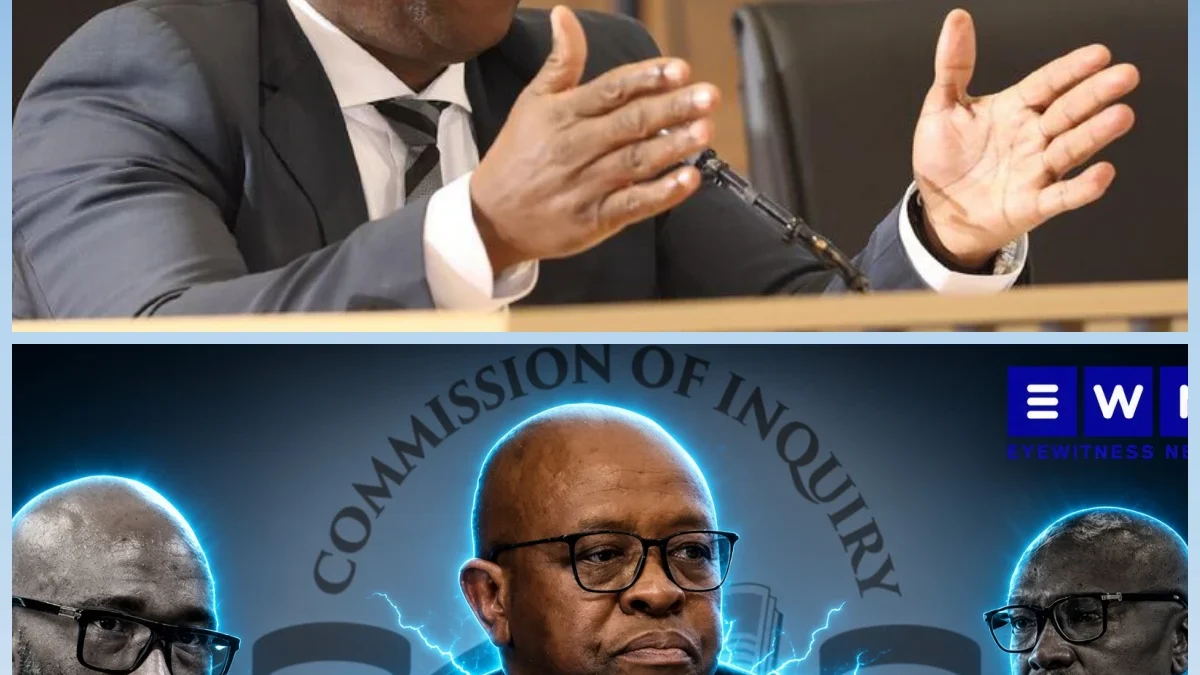
Explosive Disclosures Expose High Level Interference Inside South Africa Police Service As Secret Messages And Unlawful Cash Transfers Strike Justice System

A full year has passed since the official inauguration of the Madlanga Commission of Inquiry, an unprecedented investigation triggered directly by the explosive July 6 briefing delivered by Lieutenant General Clantlam Kunazi regarding pervasive corruption inside the South African Police Service.
The ongoing inquiry exposes an intricate network of political interference, corporate manipulation, and systematic subversion that directly threatens the structural stability of the nation’s criminal justice infrastructure.
At the epicenter of the investigation sits the political killings task team, an elite and highly specialized police unit operating primarily within KwaZulu-Natal to dismantle targeted assassination syndicates.
On New Year’s Eve 2024, former Police Minister Senzong Tunu unexpectedly issued an official directive commanding the immediate disbandment of the specialized task force.

Lieutenant General Clantlam Kunazi delivered exhaustive testimony over three consecutive days before the commission, focusing intensely on the sudden disbandment order and revealing that outside political figures actively influenced the minister to shut down the unit.
Former Police Minister Senzong Tunu formally denied all allegations of third-party influence during his appearance before the inquiry panel.
Crime Intelligence Head Domani Kumalo subsequently provided direct evidence linking the unexpected disbandment order to a high-stakes law enforcement operation executed just weeks prior.
That specific operation involved the high-profile arrest of Kadis Malef and extensive search warrants executed across multiple properties belonging to Wizimusi Katmatlala.

Domani Kumalo confirmed that the sudden assault on the political killings task team directly retaliated against these aggressive law enforcement actions, stating that the unit became targeted in a case of mistaken identity.
Forensic examination of mobile phone communication extracted directly from Wizimusi Katmatlala revealed that Bran Makottzi secretly transmitted confidential internal intelligence regarding the unit disbandment order.
Bran Makottzi actively provided classified tip-offs to Wizimusi Katmatlala in exchange for direct financial payments.
When questioned by commission members regarding why Wizimusi Katmatlala held such intense personal interest in the destruction of the task force, investigators confirmed that the target expressed extreme satisfaction after suffering continuous law enforcement harassment from the political killings task team.

Confidential communications confirmed that the political killings task team received the official termination letter on a Monday, triggering an immediate directive forcing officers to surrender all active dockets.
Shadri Sabia, who served as the Deputy National Commissioner for Crime Detection in May of the previous year, personally ordered the removal of 121 active criminal dockets from the desk of the political killings task team and transferred them directly to his private office in Pretoria.
Suspended General Shadri Sabia testified before the commission, maintaining that he relocated the 121 active dockets solely to perform administrative inspections.
Formal oversight bodies now subject suspended General Shadri Sabia to criminal probing regarding illicit links to organized crime cartels and the receipt of illegal gratification from Wizimusi Katmatlala.
During intense cross-examination, investigators confronted Shadri Sabia regarding illegal luxury assets delivered directly to his private residence, asking: “Do you recall impalas being delivered to your home?”
Suspended General Shadri Sabia vehemently denied the allegation under oath, stating: “I’ve never had impalas delivered to my home”.
Wizimusi Katmatlala currently faces an escalating wave of severe criminal charges in public court.
The newest legal indictment charges Wizimusi Katmatlala with systemic public sector corruption alongside suspended Ekurhuleni official Julius Aquinazi.
Evidence presented before the commission documented extensive illicit transactions between the parties, with investigators asserting that regardless of whether the conduct is labeled as facilitation or assistance, the actions constituted direct corruption.
Julius Aquinazi confirmed the nature of the operations, explicitly agreeing that the actions constituted facilitation.

Faced with severe penitentiary sentences, Julius Aquinazi expressed intense emotional distress during formal proceedings, stating: “I can’t agree to leave my kids and go to jail for something that I didn’t do”.
Julius Aquinazi has been formally arrested by law enforcement authorities five separate times.
Simultaneously, former Investigative Directorate Against Corruption head Andrea Johnson collapsed under official questioning after failing to defend the unlawful arrests of Domani Kumalo and other senior personnel over an internal personnel appointment.
Inquiry commissioners thoroughly reviewed legal documentation and confronted Andrea Johnson regarding sworn affidavits submitted to the court by her lead investigators.
The court filings submitted by her team falsely claimed that candidate Miss McQue lacked the mandatory seven years of senior management experience required for official appointment.
Commissioners forced Andrea Johnson to inspect the statutory provisions of Section 179, proving conclusively that no such seven-year senior management requirement exists within the law.
Andrea Johnson formally conceded the error under oath, admitting: “It is incorrect what is stated”.
Following the complete legal collapse of the prosecution theory, all formal criminal charges against Domani Kumalo and his co-accused were completely withdrawn.
Three senior members of the Investigative Directorate Against Corruption have been formally suspended from duty, and executive leadership has appointed a new acting head to lead the agency.
Despite the systemic interference and administrative orders, the political killings task team remains fully operational in KwaZulu-Natal, while authorities have established an entirely new task force in Gauteng.
The Madlanga Commission of Inquiry is finalizing its comprehensive national investigation and will submit its final report in November.
Copyright: